Are you ready for 2026? The next few years will challenge businesses and professionals to adapt fast or risk falling behind. The landscape is shifting, and those who master reaching target audiences will be the ones who succeed.
This guide is designed to give you proven, actionable steps for reaching target goals, no matter how ambitious. You'll find a clear framework to define your audience, use data for smarter decisions, embrace inclusivity, optimize your channels, and measure what works.
Expect practical tips that help you stand out and thrive. With the right strategies, you can turn uncertainty into opportunity and set yourself up for success in 2026 and beyond.
Defining Your 2026 Target: The Foundation of Success
Defining your target is the first step in reaching target success for 2026. In business, marketing, and even personal development, a “target” refers to the specific audience, customer segment, or objective you want to reach. Getting this right is critical, as it shapes everything from how you allocate resources to how you measure ROI.
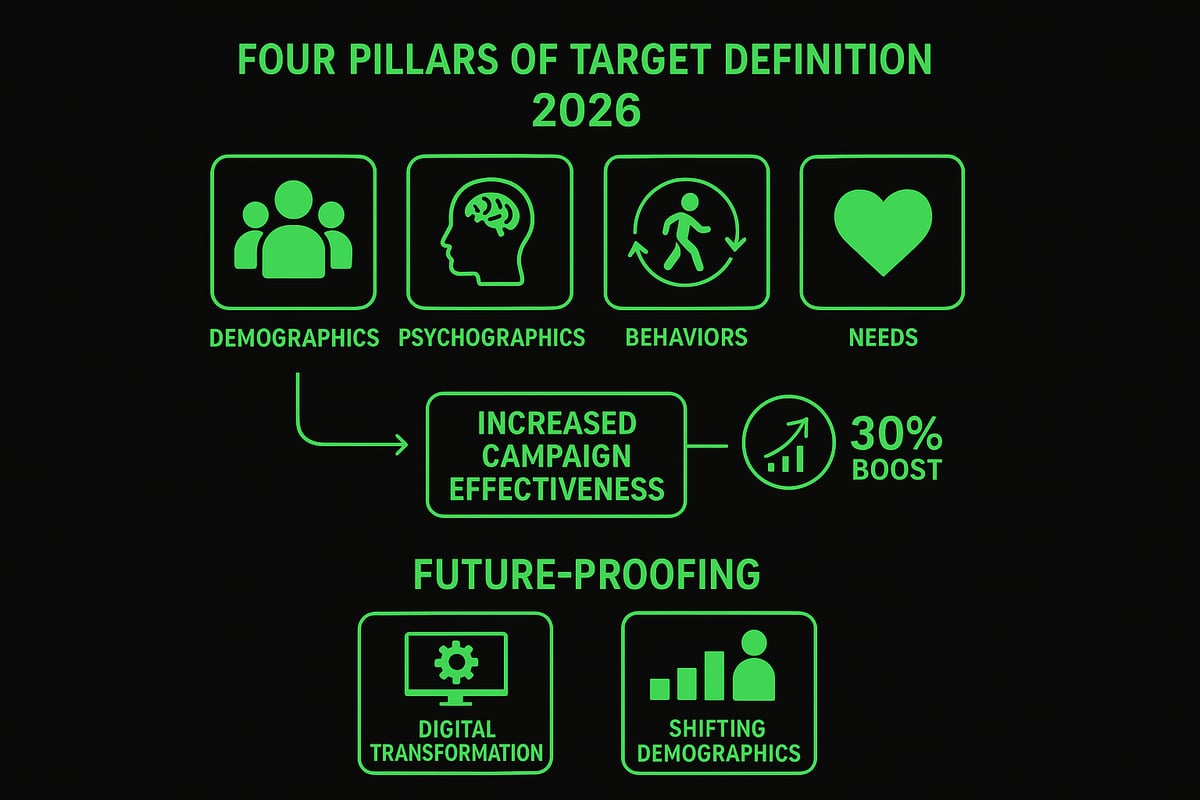
A well-defined target is built on four pillars:
| Element | Description |
|---|---|
| Demographics | Age, gender, location, income |
| Psychographics | Values, interests, lifestyle, motivations |
| Behaviors | Purchase habits, brand interactions, loyalty |
| Needs | Pain points, goals, solutions sought |
Segmenting audiences by these factors pays off. For example, a brand that redefined its audience segments saw a 30% boost in campaign effectiveness. This illustrates how reaching target precision can directly impact results.
Competitors that focus on segmenting their audiences usually see higher engagement and conversion rates. Looking ahead, future-proofing your approach is vital. Trends like digital transformation and shifting demographics mean your reaching target strategy should be flexible and data-informed.
If you want actionable steps to get started, check out these actionable tips to increase revenue, which can help guide your next moves. Ultimately, a clear target is the launchpad for every strategy that follows.
Data-Driven Insights: Leveraging Analytics to Pinpoint Opportunities
Data-driven insights are the backbone of any successful reaching target strategy in 2026. As the business landscape evolves, organizations that leverage analytics will stand out by identifying and refining their audiences with precision. The ability to interpret data is now a must-have skill for any marketer or business leader aiming to stay ahead.
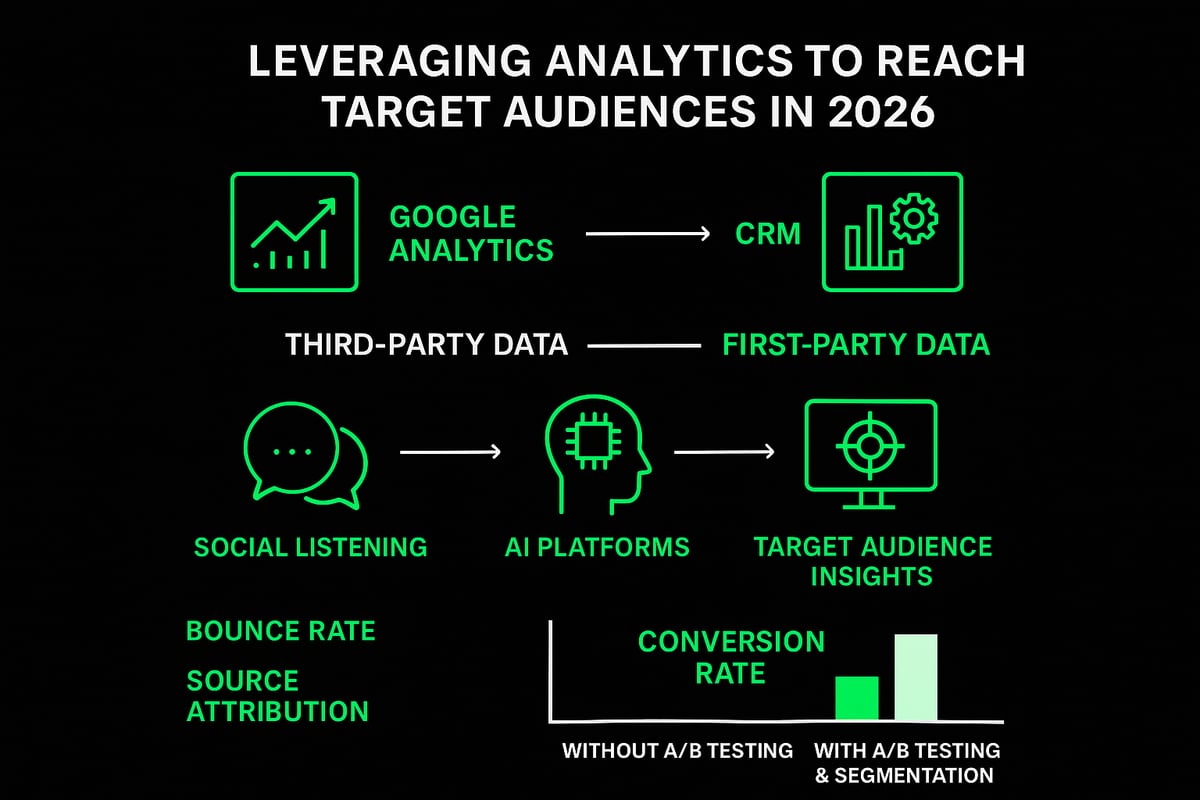
A wide array of tools is available to help you gather and analyze audience data. Platforms like Google Analytics, CRM systems, social listening tools, and AI-powered solutions offer deep visibility into behaviors and preferences. For a practical overview of how these resources can boost your reaching target efforts, check out Data analytics tools for marketers. Using these tools, you can uncover trends, segment audiences, and tailor your campaigns for maximum impact.
With the phase-out of third-party cookies by 2026, first-party data is becoming even more valuable. Analytical cookies still provide critical metrics such as bounce rate and source attribution, which are vital for optimizing campaigns. By focusing on your own data sources, you can maintain control over insights and adapt to privacy changes.
Businesses that use A/B testing and audience segmentation consistently report higher conversion rates. For example, splitting campaigns by demographic or behavior can reveal what messaging truly resonates and where adjustments are needed. This continuous testing approach leads to smarter resource allocation and better outcomes.
Real-time data empowers you to adjust strategies quickly, ensuring your efforts stay aligned with dynamic audience needs. Making decisions based on data not only reduces bias but also greatly increases the chances of reaching your target. In the fast-paced environment of 2026, the ability to pivot based on analytics will be a key competitive advantage.
Embracing Inclusivity: Expanding and Engaging Your True Audience
Inclusivity in reaching target audiences means looking far beyond age, gender, or location. It’s about understanding the full spectrum of identities, backgrounds, and needs that make up your potential customers. In 2026, brands that embrace this broader definition will not only meet ethical standards but also unlock new growth opportunities.
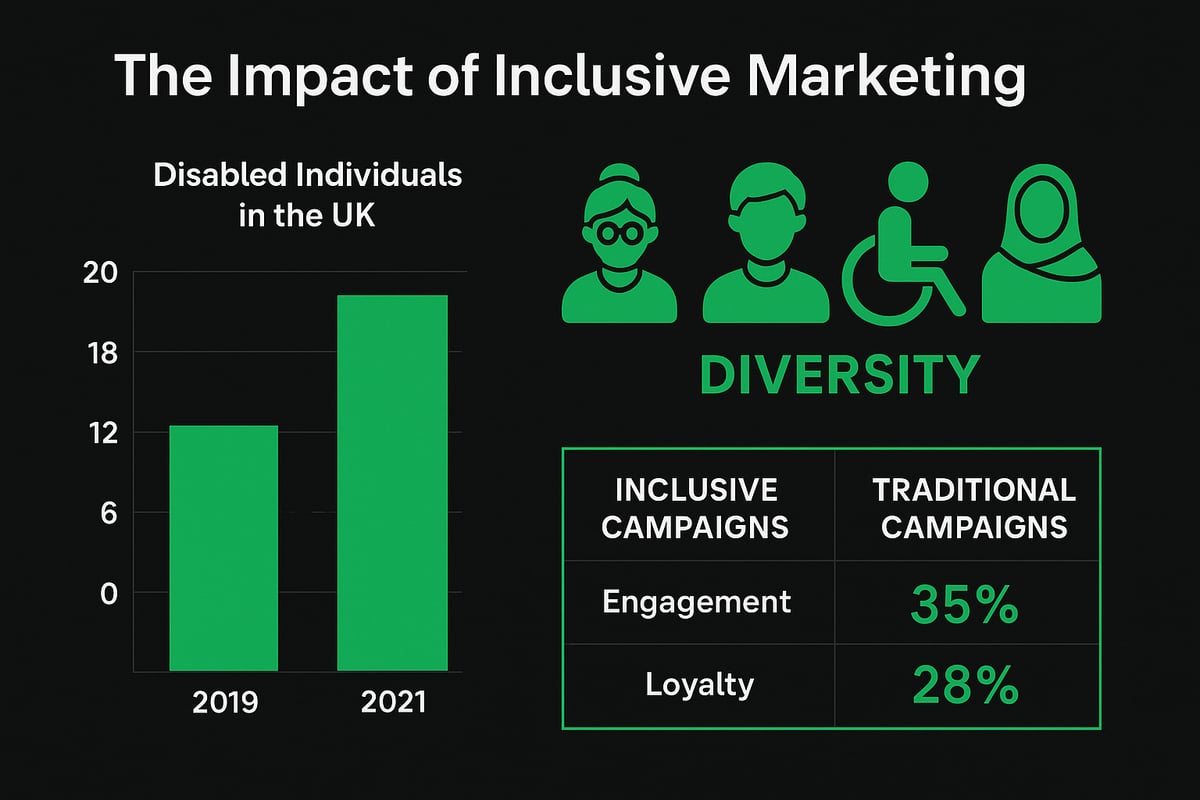
Did you know that 24% of the UK population is disabled? Ignoring this group means missing out on a huge segment with real spending power. According to recent studies, brands that fail to consider disabled audiences leave significant revenue on the table. To see how real-world inclusivity creates impact, check out inclusive marketing for diverse audiences.
Embracing inclusivity in your reaching target strategy leads to greater engagement and loyalty. Campaigns that reflect genuine diversity consistently see higher response rates and stronger brand connections. For example, one brand’s decision to feature people from different backgrounds and abilities led to a measurable rise in campaign effectiveness and customer retention.
Building trust starts with avoiding unconscious bias in your messaging. Use language and visuals that welcome everyone, rather than relying on stereotypes or token gestures. Authentic representation, not just checking a box, is what truly matters. By prioritizing inclusivity, you ensure your reaching target efforts resonate with a wider, more loyal audience.
Optimizing Channels: Multi-Platform Strategies for Maximum Impact
Selecting the right mix of marketing channels is essential for reaching target success in 2026. Audiences are more fragmented than ever, so businesses must meet them where they are—across social media, email, search engines, connected TV, and digital out-of-home.
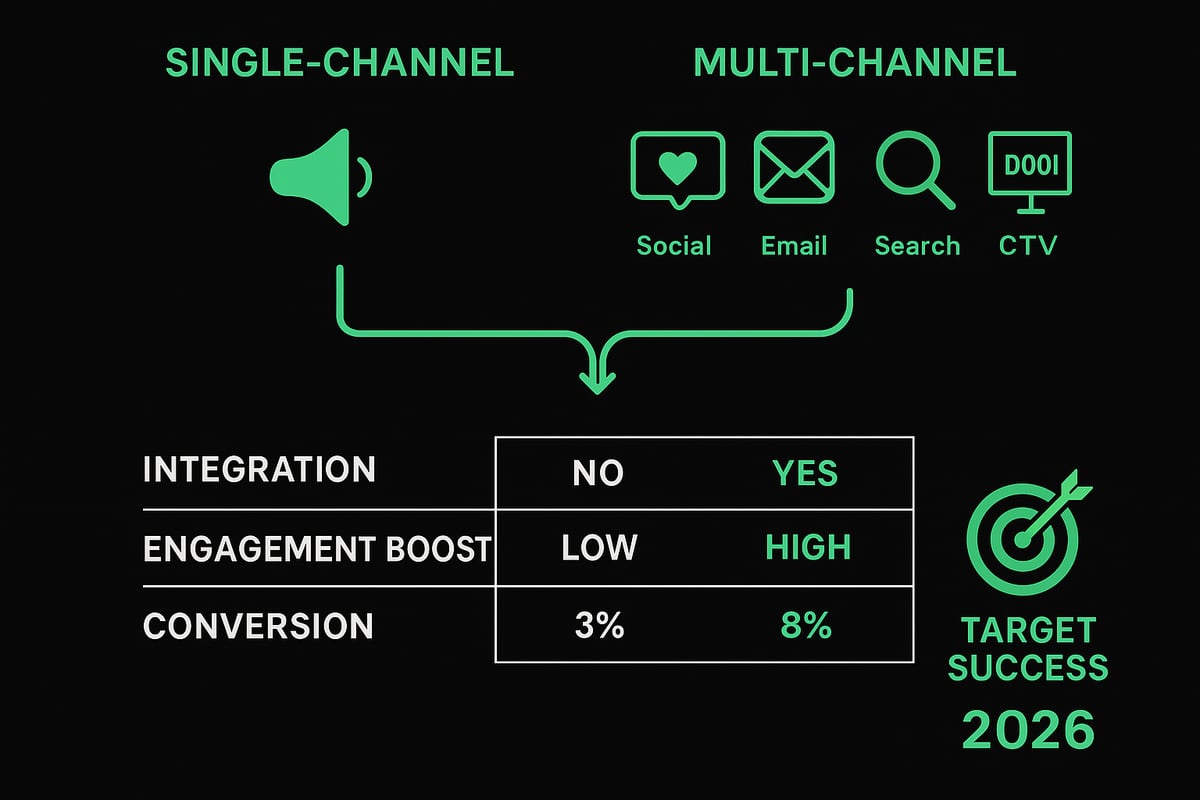
Integrating these channels ensures your messaging stays consistent and resonates with your audience. Multi-channel campaigns routinely outperform single-channel efforts, driving higher engagement and improved conversion rates. For example, brands combining digital and physical experiences often see amplified results. To dive deeper, explore these multi-channel campaign strategies for actionable event marketing tactics.
Here is a quick comparison:
| Approach | Engagement | Conversion | Consistency |
|---|---|---|---|
| Single-channel | Moderate | Lower | Limited |
| Multi-channel | High | Higher | Strong |
Channel selection should always reflect your audience's behaviors and preferences. As habits evolve, stay agile and experiment with emerging platforms. Continuous testing and optimization are crucial for reaching target objectives and maximizing impact in a dynamic landscape.
Measuring Progress: Tracking, Feedback, and Continuous Improvement
Measuring progress is at the heart of reaching target goals in 2026. Setting clear, measurable objectives and key performance indicators (KPIs) gives you a roadmap for success. Without defined metrics, it becomes difficult to know if your strategies are truly effective.
To monitor your journey toward reaching target outcomes, leverage a mix of powerful tools. Consider using:
- Custom dashboards for real-time performance snapshots
- Analytics platforms to track user behavior and campaign impact
- Attribution models that show which efforts drive results
Competitors are already maximizing these tools. Many brands use post-campaign analysis to pinpoint what works, boosting their future return on investment. For example, data-driven feedback cycles help companies adapt quickly and outperform static plans. As highlighted in Seven Data-Driven Principles for B2B Marketing ROI, ongoing measurement and analysis are essential for hitting ambitious business targets.
Agility is another key factor. Real-time data lets you pivot strategies on the fly, making small adjustments that keep you on the path to reaching target milestones. Regularly collecting feedback from diverse audience segments ensures your message stays relevant and impactful.
Continuous improvement is more than a buzzword, it is a proven approach for 2026 success. By closing the loop between planning and execution, you create a culture of learning and adaptability. Leading UK firms are already prioritizing data-driven innovation for growth, as seen in Data-Driven Innovation in UK Channel Partners. Make measurement, feedback, and iteration your ongoing priorities to stay ahead.
Future-Proofing Your Target Strategies for 2026 and Beyond
Anticipating change is crucial for reaching target goals in 2026 and beyond. Businesses face a landscape shaped by rapid AI integration, evolving privacy regulations, and shifting consumer expectations. Staying ahead means recognizing and adapting to these trends as they emerge.
Embracing AI-powered tools, such as AI-Powered Data Engines in Marketing, allows organizations to unify customer data and personalize outreach at scale. As privacy changes limit third-party data, first-party insights become even more valuable for reaching target audiences with precision.
Agility is the backbone of future-ready strategies. Early adopters of emerging technology often gain a competitive edge, as shown in this simple comparison:
| Approach | Outcome |
|---|---|
| Proactive (AI, scenario planning) | Faster adaptation, higher ROI |
| Reactive | Missed opportunities, slower growth |
Continuous learning is essential. Invest in upskilling teams and upgrading your marketing stack to stay relevant. Encourage regular scenario planning and market research to anticipate changes, not just react to them.
Building flexibility into your planning enables your team to pivot quickly when market conditions change. Community engagement and brand transparency foster long-term trust, making your reaching target strategies more resilient.
In summary, the pillars of success for 2026 are clear: define your audience, analyze with data, include diverse voices, optimize across channels, and measure everything. By weaving these into your approach, you are well-positioned to exceed your reaching target goals in the years ahead.
Now that you’ve seen how defining your target, leveraging data, embracing inclusivity, and optimizing your channels can set you up for 2026 success, it’s time to put these strategies into action. Every event and brand is unique, and sometimes you just need a sounding board or a tailored approach to get things moving in the right direction. If you’re ready to boost ticket sales, maximize conversions, and grow your brand with data-driven, creative event marketing solutions, let’s connect and map out your next steps together.
Let’s Talk