Is your planner agency prepared for the dramatic shifts coming in 2026? The event planning world is moving fast, bringing new challenges and opportunities for those ready to adapt. This guide gives your planner agency a clear, step-by-step roadmap to thrive in the evolving landscape. Discover emerging trends, must-have skills, the latest technologies, workflow improvements, and smart marketing strategies. You will also learn how to strengthen client relationships and deliver measurable results. Get ready to future-proof your agency with proven tactics, expert insights, and actionable steps designed to help you stand out and grow in 2026.
Understanding the 2026 Event Planning Landscape
The event planning world is on the brink of dramatic change. For any planner agency aiming to stay ahead, understanding the 2026 landscape is crucial. The industry is being shaped by several powerful trends, and agencies that adapt will find new opportunities.
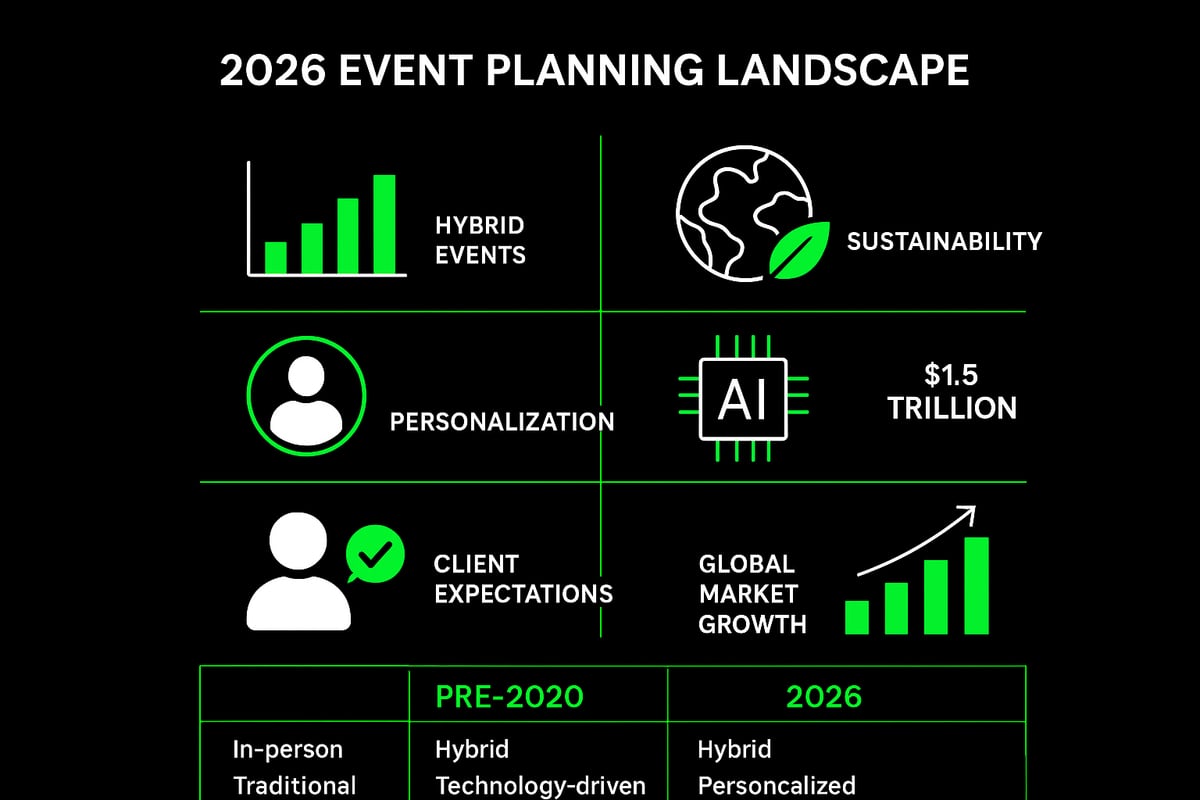
Key trends for 2026 include:
- Hybrid events combining in-person and virtual experiences
- Sustainability as a core expectation for clients and attendees
- Deep personalization through data and AI
- Strategic, data-driven planning for better ROI
Technology is a major force behind these shifts. AI-powered tools, automation, and virtual or augmented reality are not just buzzwords—they are transforming how planner agency teams design, market, and execute events. For a deeper dive into these innovations and what they mean for agencies, check out the Event industry trends for 2026.
Clients are also raising the bar, seeking unique experiences and clear, measurable outcomes. The global event industry is projected to hit $1.5 trillion by 2026, showing strong demand and fierce competition. Meanwhile, new regulations around health, safety, and data privacy require agencies to stay agile and informed.
Many leading agencies have thrived by embracing change after the pandemic. Some shifted to specialized niches or boutique services, which allowed them to stand out in a crowded market. Today, a planner agency that evolves with these trends and invests in tech, creativity, and compliance will be well positioned to succeed.
Building a Future-Ready Planner Agency Team
Building a future-ready planner agency team starts with understanding which roles will drive success in 2026. The right mix of talent lets your planner agency adapt to new challenges and stay ahead of competitors.
Key Roles and Upskilling for 2026
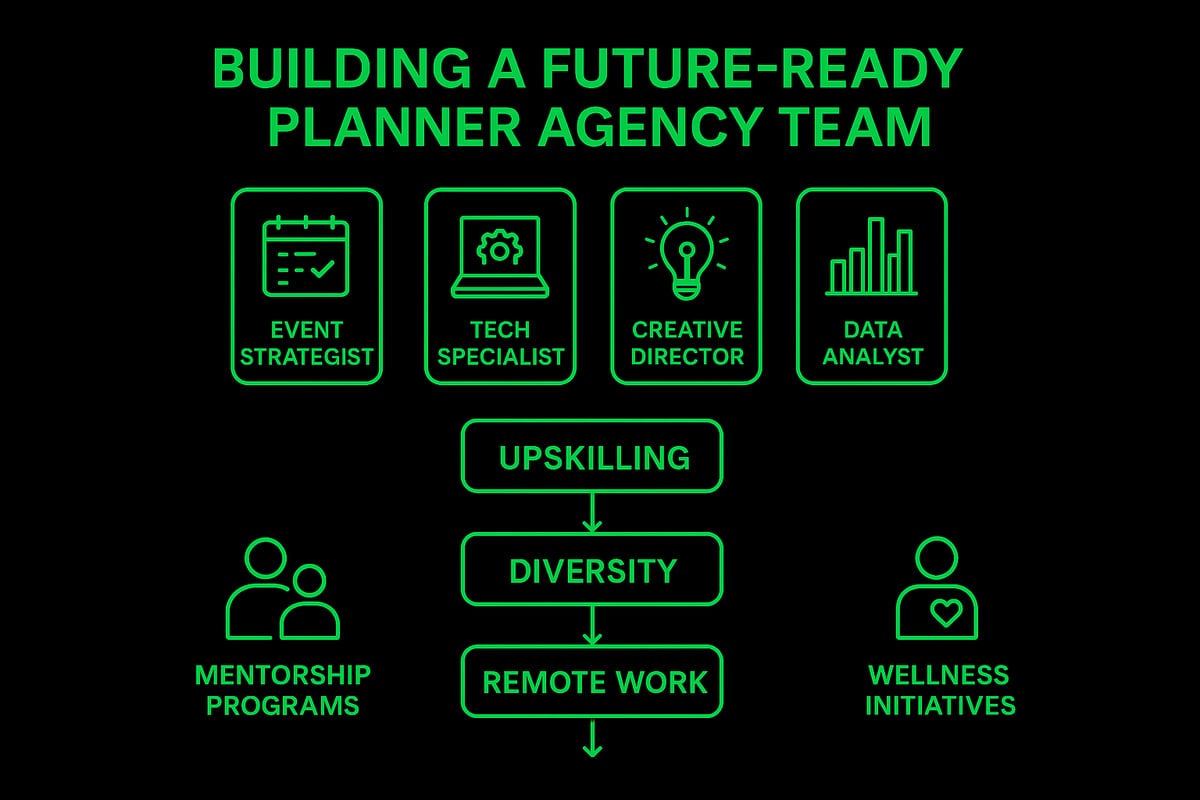
A future-ready planner agency invests in roles like event strategists, tech specialists, creative directors, and data analysts. These professionals bring fresh ideas, technical expertise, and data-driven insights.
Upskilling is essential. Encourage your staff to pursue training in digital tools, project management, and customer experience. To learn more about how artificial intelligence is shaping these roles, explore AI’s role in event planning.
Diversity, Inclusion, and Work Models
Diverse teams foster creative problem-solving and innovative thinking. Prioritize diversity and inclusion in hiring and team development.
Adopt remote and hybrid work models to boost productivity and attract top talent. Use collaboration tools and regular check-ins to maintain team cohesion.
Recruitment and Retention Strategies
Recruitment is competitive. A planner agency should highlight flexible work options, growth opportunities, and a strong company culture to attract the best candidates.
Retention matters just as much. Invest in employee wellness programs, career development, and mentorship to keep your team engaged and motivated.
Real-World Example and Conclusion
Many agencies use mentorship programs to bridge skill gaps and support career growth. By focusing on team development, your planner agency will be ready to meet the demands of 2026.
Embracing Technology and Digital Transformation
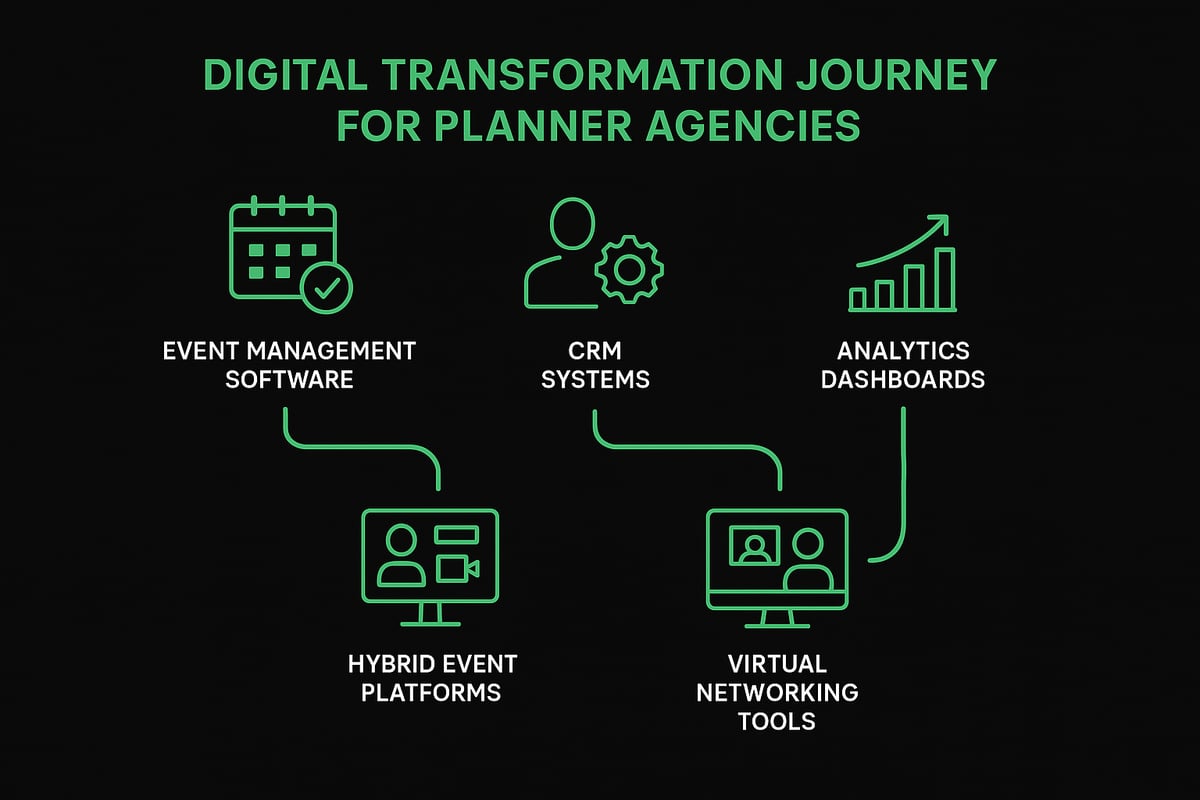
The future of event planning hinges on digital transformation. As a planner agency, staying ahead means adopting the right technology to streamline operations, enhance client experiences, and boost efficiency. Embracing these changes now will set your agency apart in a rapidly evolving industry.
Key Digital Tools for Planner Agencies
Every planner agency must leverage essential digital tools to keep up with industry demands. Event management software helps automate registrations, handle guest lists, and enhance attendee engagement. CRM systems centralize client information, making personalized communication simple and effective. Project management platforms ensure teams collaborate smoothly, track deadlines, and deliver events on schedule.
Common digital tools include:
- Event management platforms (e.g., Cvent, Eventbrite)
- CRM systems for client tracking
- Team collaboration and project management tools
With the right mix of these technologies, a planner agency can handle more complex projects with greater confidence and efficiency.
Leveraging Data for Strategic Planning
Harnessing data is now a must for agencies seeking to deliver measurable value. Collecting attendee insights before, during, and after events reveals valuable trends and preferences. Analytics tools make it easy to track event performance, identify what works, and optimize for better results.
For example, agencies using data-driven strategies have reported up to 20% increases in client retention. Key data points to monitor include:
- Registration and attendance rates
- Engagement levels across sessions
- Post-event feedback and satisfaction scores
With regular analysis, agencies can demonstrate ROI to clients and refine their approach for future success.
Integrating Hybrid and Virtual Event Solutions
Hybrid and virtual events are now standard for clients seeking flexibility and reach. Specialized platforms offer seamless experiences for both in-person and remote attendees, while virtual networking tools boost engagement. For agencies ready to lead, exploring virtual and hybrid events solutions can unlock new opportunities.
A planner agency that embraced hybrid formats in 2025 saw increased attendance and stronger client relationships. Successful campaigns combined livestreaming, interactive Q&A, and personalized digital experiences to deliver maximum value.
By adopting these solutions, agencies can meet evolving client needs and future-proof their business.
Optimizing Workflow and Agency Operations
Optimizing workflow is crucial for every planner agency aiming to stay agile in 2026. Agencies that streamline operations not only boost productivity but also deliver consistent, high-quality results for their clients.
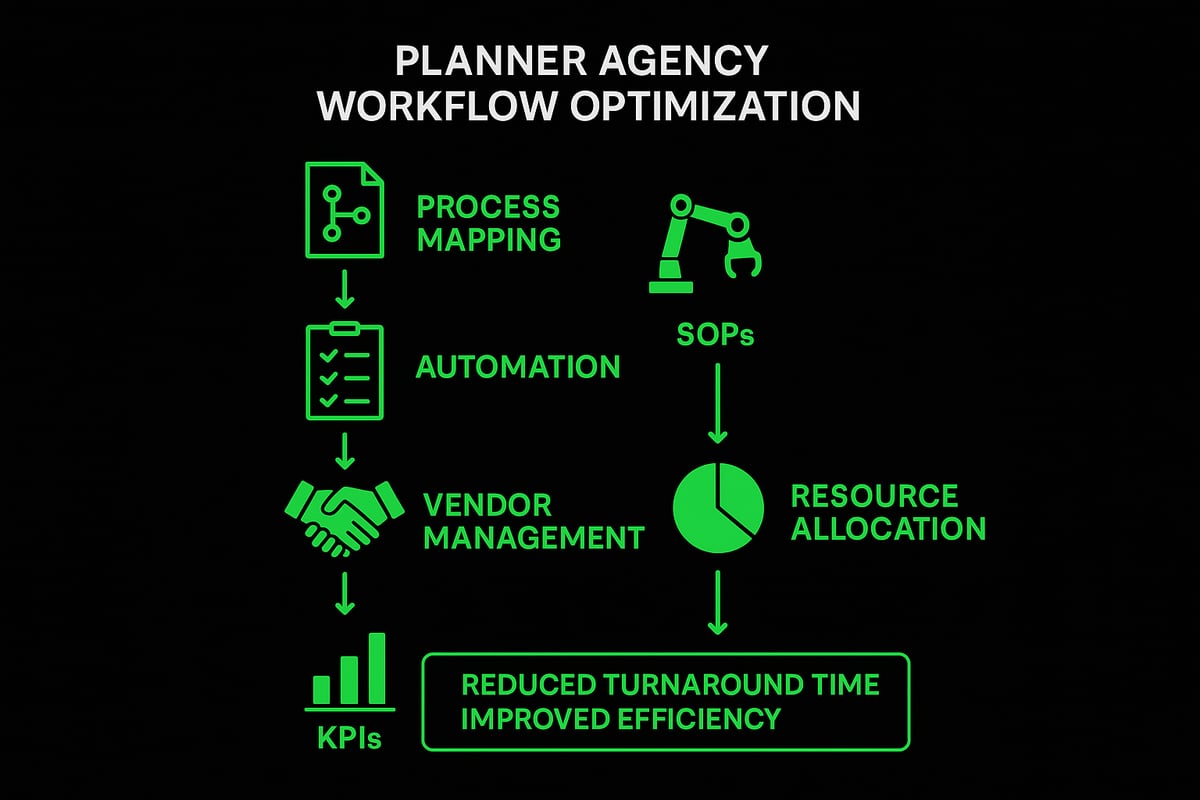
Begin with process mapping to break down each step of your event planning cycle. Identify bottlenecks and repetitive tasks, then implement automation for scheduling, invoicing, and reporting. This not only reduces manual errors but frees up your team to focus on creative, client-facing work.
Standard operating procedures, or SOPs, are essential for maintaining consistency as your planner agency scales. Document workflows so new and existing team members can follow best practices. Vendor management also plays a key role; build reliable partnerships and regularly review contracts to ensure favorable terms. For more on organizing client data and streamlining communication, explore some essential CRM tools for agencies.
Effective resource allocation is vital. Use budgeting tools to forecast project needs and assign staff wisely across multiple events. Many agencies have cut project turnaround times by up to 30 percent just by refining workflow processes and reallocating resources based on real-time data.
Finally, measure performance using clear KPIs. Regular team reviews help your planner agency spot trends, adjust strategies, and drive continuous improvement. With these steps, your agency can operate more efficiently and stay ahead in a competitive market.
Marketing Strategies for Planner Agencies in 2026
Staying visible and relevant is more important than ever for a planner agency in 2026. With digital competition on the rise, agencies must embrace a proactive, multi-channel marketing approach to reach and convert new clients.
A strong online presence is essential. Focus on SEO, content marketing, and building social proof with testimonials. For a comprehensive overview, see the Event marketing fundamentals guide.
Social media continues to evolve. Leverage video content, live streaming, and influencer collaborations to engage audiences. Platforms like LinkedIn, Instagram, and TikTok offer unique ways to showcase your planner agency’s expertise and recent successes.
Email marketing remains a powerful tool. Use personalized campaigns to nurture leads and retain clients. Segment your audience for tailored messaging that resonates with their specific needs.
Showcase your event portfolio with high-quality visuals, case studies, and client testimonials. This builds trust and highlights your agency’s capabilities.
Strategic partnerships and collaborations can expand your reach. Work with vendors, venues, and influencers to access new audiences and elevate your brand.
Consider how AI tools can boost your strategy. Learn more from AI in event marketing strategies.
Many planner agencies have doubled inquiries by targeting professional platforms, like LinkedIn, with focused campaigns.
As digital advertising algorithms and platforms shift, stay agile. Monitor trends, update tactics, and measure results to ensure your planner agency stays ahead in a competitive landscape.
| Digital Strategy | Key Benefit |
|---|---|
| SEO & Content | Boosts visibility |
| Social Media | Drives engagement |
| Email Campaigns | Enhances retention |
| Event Portfolio | Builds credibility |
| Partnerships | Expands reach |
| AI Tools | Increases efficiency |
Strengthening Client Relationships and Delivering Value
Building strong client relationships is the backbone of every successful planner agency. Open communication, regular updates, and a transparent approach help set clear expectations and foster trust with every client.
Customization is key. Each event should reflect the unique goals and vision of your client. Collecting feedback after each project, and acting on it, not only improves your services but shows clients you value their input.
Offering value-added services can set your planner agency apart. Consider providing creative event concepts, post-event analytics, and sustainability consulting. For example, integrating sustainability in event planning is increasingly important to clients seeking eco-friendly solutions.
| Value-Added Service | Client Benefit |
|---|---|
| Post-event analytics | Measurable ROI |
| Creative event concepts | Unique attendee experience |
| Sustainability consulting | Eco-friendly reputation |
Long-term partnerships are built on trust and proactive relationship management. Loyalty programs and exclusive offers can increase client retention and lifetime value. Many agencies have seen a 25% boost in client value by focusing on these strategies.
When challenges arise, address them quickly and professionally. Effective conflict resolution and crisis management help maintain strong relationships, even when issues occur. A planner agency that anticipates needs and delivers consistent value will thrive in 2026.
Now that you have a clear roadmap for adapting to the evolving event planning landscape—from embracing new tech and industry trends to optimizing your agency’s workflow and building stronger client relationships—it’s time to put these strategies into action. If you’re ready to boost ticket sales, elevate your marketing approach, and make your agency future proof for 2026, I’d love to help you take those next steps. Let’s explore how Greenslant’s tailored event marketing solutions can support your goals and set your agency up for long term success. Let’s Talk