

In 2026’s rapidly changing market, a successful product debut can make or break your brand’s future. The stakes have never been higher, with each launch watched closely by competitors and customers alike.
This guide is designed to help you master every stage of your launch strategy, providing a step-by-step approach to maximize adoption, revenue, and brand impact. You’ll learn the essentials of a winning launch—from research and planning to messaging, execution, and post-launch optimization.
Ready to unlock proven tactics and expert insights? Dive in to discover how a strong launch strategy can set your product apart and drive lasting success.
Understanding Product Launch Strategy Fundamentals
A launch strategy is a coordinated plan designed to introduce a new product to the market and drive adoption from day one. Unlike ad hoc launches that often fall flat, a robust launch strategy aligns vision, objectives, and tactical execution for maximum impact.
What sets a launch strategy apart from a launch plan? According to productboard, a strategy defines the big-picture vision and goals, while the plan lays out the tactical steps and timelines to get there.
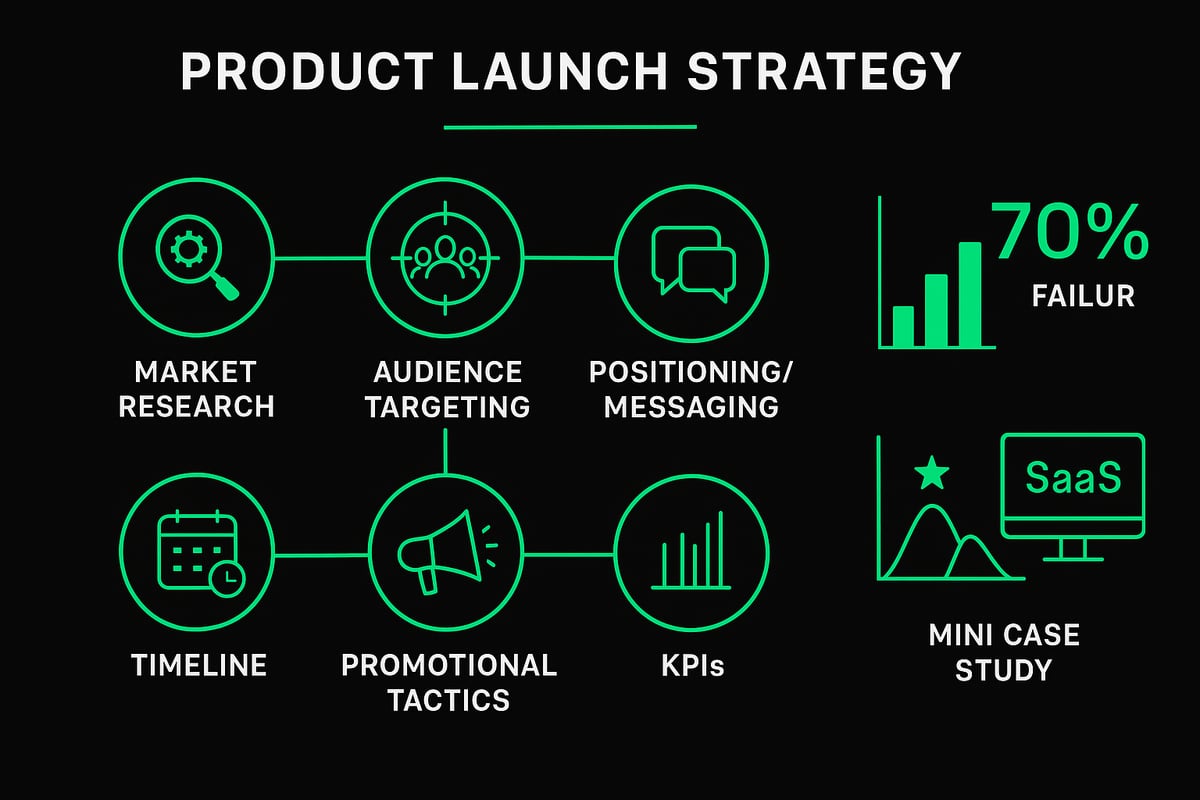
Core components of a successful launch strategy:
| Component | Purpose |
|---|---|
| Market Research | Understand trends, competitors, and needs |
| Audience Targeting | Identify and segment key customer groups |
| Positioning & Messaging | Communicate unique value to the market |
| Timeline | Schedule key milestones and activities |
| Promotional Tactics | Choose channels and campaigns |
| KPIs | Measure progress and outcomes |
A strong launch strategy brings clarity to teams, ensures consistent messaging, and proactively manages risks. It also helps allocate resources wisely and creates a clear edge over competitors.
Yet, data shows that 70% of launches fail due to poor strategy or market fit. As highlighted in 95% of new products fail, the risks of skipping strategy are real. For instance, many SaaS companies that invest in a thoughtful launch strategy have rapidly scaled, while those that did not often stall or fade quickly.
A clear launch strategy is the difference between a product that thrives and one that struggles to gain traction.
Pre-Launch Planning: Research, Audience, and Preparation
Before any product hits the market, a well-crafted launch strategy begins with solid pre-launch planning. This phase sets the tone for everything that follows, ensuring your team is aligned and your product resonates with the right audience.
Market Research and Analysis
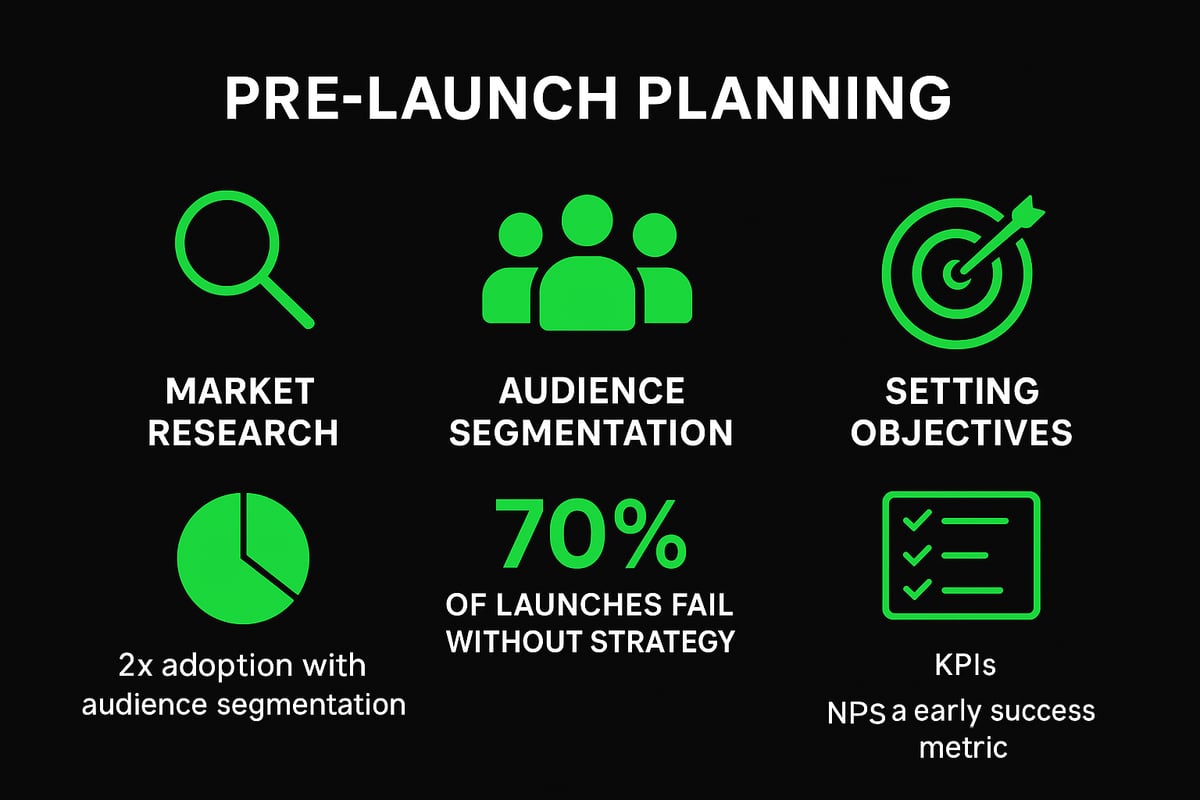
Thorough market research is the backbone of an effective launch strategy. Start by analyzing industry trends, studying competitor launches, and identifying gaps in the market. Reviewing lessons from competitors helps you avoid common pitfalls and spot unique opportunities.
Gather both qualitative and quantitative data, such as customer surveys, focus groups, and retention curves. Look for patterns in user behavior and unmet needs. For example, TBH succeeded by tailoring its approach to specific communities, driving rapid adoption. According to Launch strategy and demand outcomes, strategic pre-launch planning directly correlates with higher demand and market success.
- Analyze competitor campaigns
- Conduct customer interviews
- Review industry reports
Defining and Segmenting Your Target Audience
A successful launch strategy requires a laser focus on your audience. Define who your ideal customers are by creating detailed buyer personas. Include demographics, behaviors, motivations, and pain points. Targeting everyone too soon can backfire, leading to negative feedback and diluted word-of-mouth.
Segmented launches see adoption rates double compared to broad, unfocused releases. Use this data to refine messaging and prioritize features that matter most to your core users.
Key persona elements:
- Age and location
- Job role and company size
- Challenges and goals
Setting Objectives, Timelines, and Success Metrics
Set clear, measurable objectives for your launch strategy. These might include sales targets, user adoption goals, or brand awareness benchmarks. Align key performance indicators (KPIs) with your overall vision.
Build a realistic timeline that covers pre-launch teasers and robust post-launch follow-up. Early metrics like retention rates and Net Promoter Score (NPS) provide quick feedback on how well your launch is performing.
| Objective | Example KPI |
|---|---|
| Sales | Units sold, revenue |
| Adoption | Active users |
| Awareness | Social mentions |
Clear objectives keep your team focused and increase your odds of launch success.
Crafting Your Unique Value Proposition and Messaging
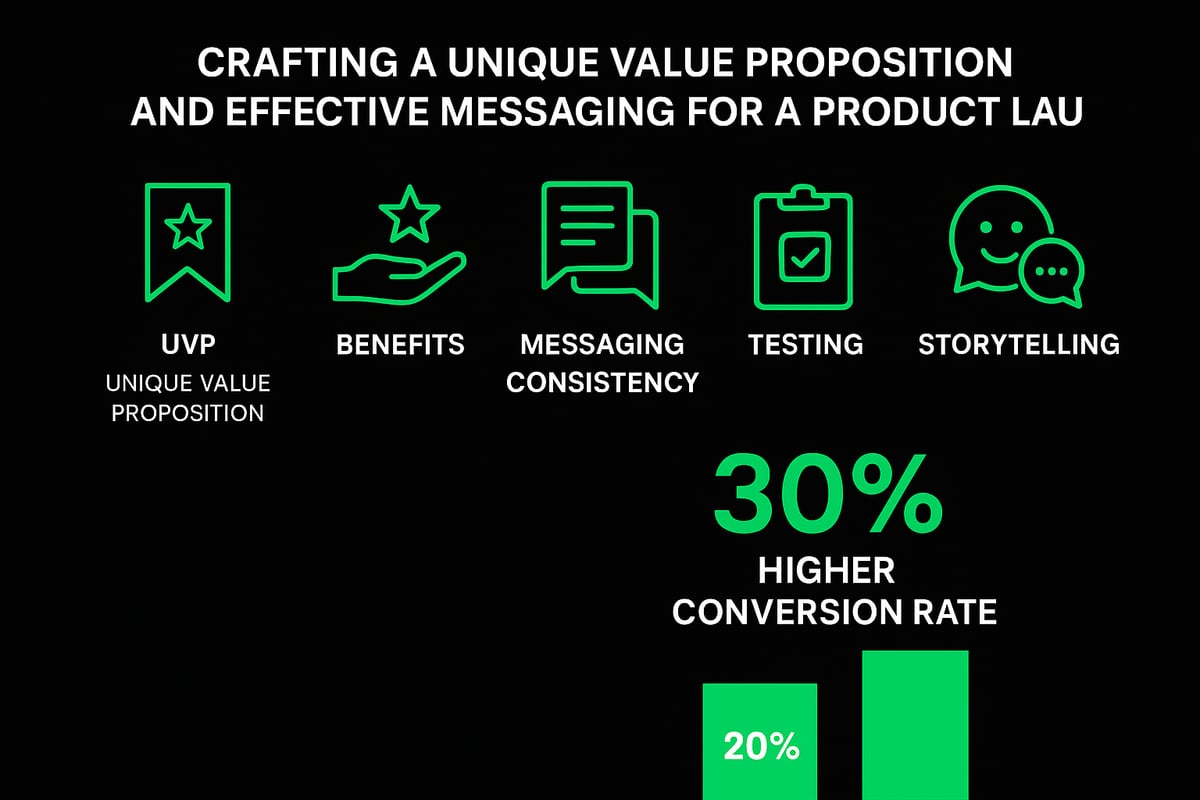
A compelling unique value proposition (UVP) is the backbone of any successful launch strategy. Your UVP clearly defines what sets your product apart, making it memorable and persuasive in a crowded marketplace.
Instead of listing features, focus on the real benefits your product brings. Solve customer pain points in your messaging, and keep your language consistent across every channel and asset. According to competitor insights, brands with cohesive messaging are more likely to be remembered and trusted. For example, Productboard’s UVP centers on product excellence, which resonates with their audience and supports their launch strategy.
Before a full rollout, test your messaging with a small segment to see what resonates. Storytelling can make your launch memorable and relatable, helping customers connect emotionally with your brand. In fact, products with strong UVPs see a 30% boost in conversion rates at launch. Consistent messaging, tested and refined, is essential to a launch strategy that stands out and drives results.
Step-by-Step Guide: Executing Your 2026 Product Launch
Launching a new product in 2026 requires more than excitement and ambition. You need a launch strategy that turns vision into action, guiding your team through every critical phase. Here’s a clear, step-by-step approach to ensure your product debut is both impactful and memorable.
1. Finalizing the Launch Plan and Readiness Checklist
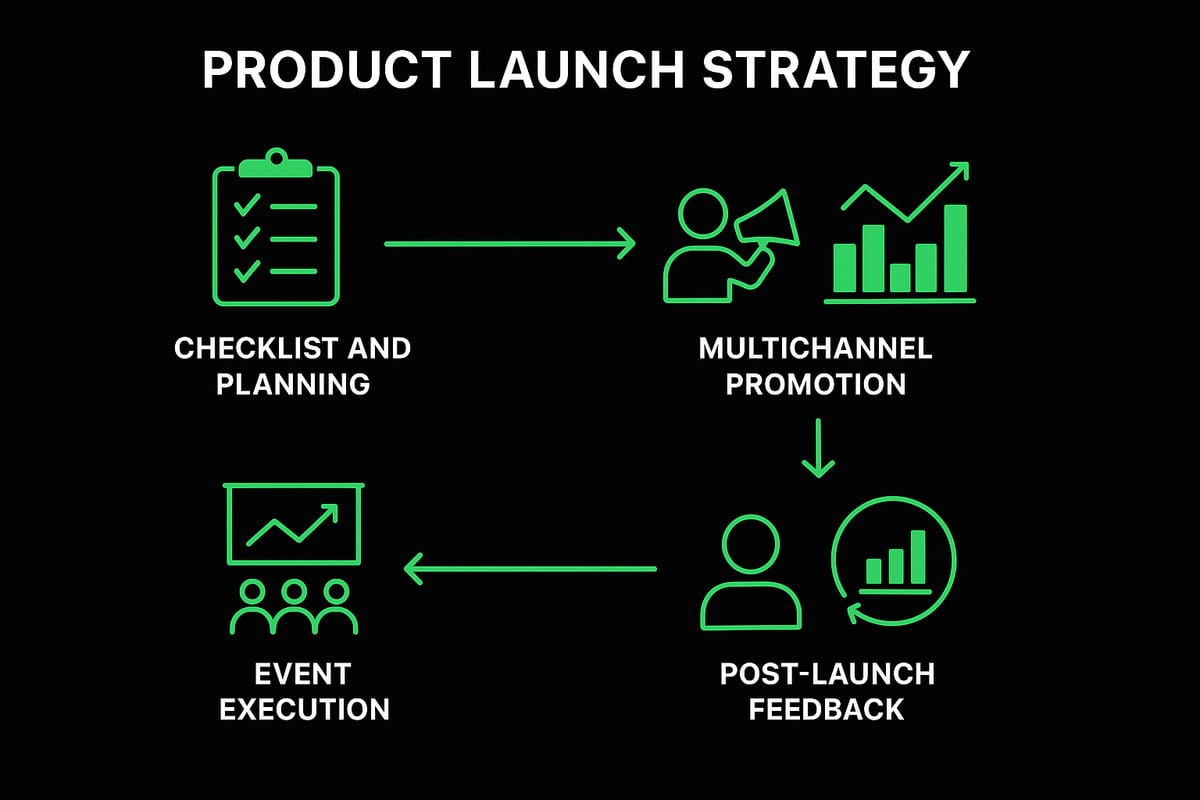
Begin by making sure every detail is accounted for. Align your cross-functional teams so marketing, sales, and product are moving in sync. Confirm all assets—ad creatives, landing pages, demos, and sales materials—are ready and accessible.
- Assign clear roles and responsibilities.
- Prepare contingency plans for potential issues.
- Double-check timelines and deliverables.
A thorough pre-launch checklist reduces surprises and keeps your launch strategy on track.
2. Multichannel Promotion and Influencer Outreach
Next, amplify your reach by promoting your launch across multiple channels. Combine digital ads, PR, social posts, email, and events for maximum visibility. Influencer marketing can also boost trust and credibility with new audiences.
For a deeper dive into these tactics, explore multichannel event marketing strategies to see how coordinated campaigns drive results.
- Partner with industry leaders for endorsements.
- Schedule posts and ads to build anticipation.
- Monitor channel performance and adjust quickly.
A diverse approach ensures your launch strategy connects with your target audience wherever they are.
3. Launch Event Execution and Real-Time Monitoring
Host a launch event that fits your audience—virtual webinars, live streams, or in-person gatherings. Use real-time analytics to track engagement, sign-ups, and feedback as the event unfolds.
- Monitor traffic spikes and conversion rates.
- Adjust messaging based on live insights.
This allows you to capitalize on momentum and make data-driven decisions as your product debuts.
4. Gathering and Responding to Early Feedback
After launch, collect and analyze feedback from reviews, NPS surveys, and social listening. Respond quickly to address concerns and improve the user experience.
- Prioritize actionable feedback.
- Implement rapid iterations based on user input.
Listening closely post-launch helps you build momentum and refine your product for sustained growth.
Post-Launch Optimization: Feedback, Iteration, and Sustained Growth
A successful launch strategy does not stop at the debut. The post-launch phase is critical for driving sustained growth, retention, and long-term product success.
Collect Feedback: Start by gathering customer reviews, survey results, and support tickets right after launch. Organize this feedback to spot trends and areas needing improvement.
Analyze and Iterate: Use real user data to identify actionable insights. Leveraging big data in product design enables teams to make targeted, effective changes that address user pain points quickly.
Ongoing Marketing and Community: Keep momentum with email nurturing, sharing fresh content, and highlighting positive user stories. Build a thriving community through forums, user groups, and active social media engagement.
- Share success stories and testimonials
- Provide regular product updates
- Foster conversations among early adopters
Competitor research shows that rapid iteration after launch greatly improves retention and satisfaction. For example, regularly reassessing pricing and positioning helps products stay competitive. Remember, 80% of successful products maintain a structured post-launch feedback loop.
Measuring Launch Success: Key Metrics and Continuous Improvement
Measuring the effectiveness of your launch strategy is critical for long-term growth. Success is not just about the initial buzz, but about tracking real impact and learning for future launches. With the right metrics, you turn every product debut into a data-driven opportunity.
Key Metrics for Launch Strategy Success
To truly understand your launch strategy performance, track these essential metrics:
| Metric | What It Measures |
|---|---|
| Sales Revenue | Total income from launch |
| Customer Acquisition Cost (CAC) | Cost to gain each new user |
| Market Share | Percentage of industry captured |
| Website Traffic | Visitor volume and engagement |
| Social Engagement | Shares, likes, comments |
| Product Adoption | New user activation rates |
| Net Promoter Score (NPS) | Customer satisfaction and loyalty |
| Retention Rates | Ongoing user engagement |
Monitoring these numbers provides a clear picture of your launch’s strengths and weaknesses.
Setting Benchmarks and Aligning KPIs
Before you launch, set clear benchmarks for each metric. Align your KPIs with both short-term goals, like initial sales, and long-term targets, such as retention. Leading companies use frameworks that blend these perspectives, ensuring every team member knows what success looks like.
Industry insights, such as those found in the Product launch software market growth, show that robust measurement frameworks are becoming standard for high-performing teams.
Calculating ROI and Continuous Improvement
Calculating the ROI of your launch strategy requires tracking marketing spend versus outcomes. Review which channels delivered the best results and use analytics to pinpoint what drove conversions. Make it a routine to analyze these findings after every launch.
Continuous improvement means integrating customer feedback and data into your next launch strategy. Companies that follow structured, metric-driven review cycles are twice as likely to exceed their sales targets.
As you’ve seen, mastering a product launch in 2026 takes more than a great idea—it’s about smart planning, clear messaging, and choosing the right partners to amplify your reach. If you’re ready to elevate your product debut and want expert support in event marketing, creative production, and advanced tracking, I’d love to help you make it happen. Let’s take your launch from strategy to standout success—Let’s Talk about how we can work together to maximize your impact and achieve real results.