Understanding how many times potential attendees see your event promotions can make the difference between a sold-out venue and empty seats. Advertising exposure represents the foundational metric that determines whether your event marketing campaigns reach the right people with sufficient frequency to drive action. For event organizers and promoters, mastering this concept transforms how you allocate budgets, choose channels, and measure campaign effectiveness.
What Advertising Exposure Means for Event Marketing
Advertising exposure measures the actual time and frequency that target audiences encounter your promotional content across various channels. Unlike simple impression counts, this metric accounts for meaningful visibility that creates awareness and drives ticket purchases.
For event marketers, this distinction matters significantly. A festival promotion that appears briefly in a crowded social feed differs dramatically from a targeted video ad that captures attention for 15 seconds. Both generate impressions, but their exposure quality varies substantially.
Measuring Meaningful Contact Points
The opportunity to see metric helps quantify how many chances your target audience has to encounter event advertising. This measurement considers:
- Frequency across channels: How often the same person sees your ads on different platforms
- Duration of visibility: How long ads remain viewable to potential attendees
- Contextual relevance: Whether ads appear when audiences are receptive to event information
- Device-specific considerations: How exposure differs between mobile, desktop, and connected TV
Modern tracking technologies enable event marketers to measure these factors with precision, creating comprehensive exposure profiles for different audience segments.
The Science Behind Effective Exposure Levels
Research on single-source data demonstrates how advertising exposure directly influences purchase behavior when measured consistently across time. For events, this means tracking the same individuals from first exposure through ticket purchase to understand optimal frequency.
Event audiences typically require multiple exposures before taking action. Industry data suggests that potential attendees need between 5 and 12 meaningful contacts with event promotions before committing to purchase tickets.
| Exposure Level | Audience Response | Recommended Action |
|---|---|---|
| 1-2 touches | Initial awareness | Build recognition with broad reach |
| 3-5 touches | Active consideration | Provide detailed event information |
| 6-8 touches | Decision stage | Emphasize urgency and social proof |
| 9+ touches | Conversion or rejection | Retarget with compelling offers |
This framework helps event marketers structure campaigns that deliver sufficient advertising exposure without creating fatigue or diminishing returns.
Optimizing Exposure Across Digital Channels
Digital platforms offer unprecedented control over advertising exposure, allowing event promoters to fine-tune visibility and frequency. Understanding viewable impression standards ensures your event ads actually register with potential attendees rather than loading off-screen or getting skipped immediately.
Strategic Channel Selection
Different platforms deliver advertising exposure with varying effectiveness for event marketing:
- Social media advertising provides high-frequency exposure to targeted demographics
- Programmatic display builds sustained awareness through repeated touchpoints
- Video platforms deliver extended exposure with rich storytelling capabilities
- Email marketing creates direct, personalized exposure to engaged audiences
- Connected TV reaches audiences in lean-back environments with premium attention
Research shows that users are exposed to a median of 70 ads per week across platforms, creating a crowded environment where event promotions must stand out. Strategic frequency capping prevents oversaturation while maintaining adequate exposure levels.
The view-through rate metric helps measure post-impression responses, revealing which exposure patterns drive delayed conversions. For events with longer purchase cycles, this measurement proves particularly valuable in understanding how early advertising exposure influences later ticket sales.
Building Competitive Visibility
Your event's share of voice determines how much advertising exposure you capture compared to competing events and entertainment options. This competitive positioning directly impacts ticket sales and brand recognition within your market.
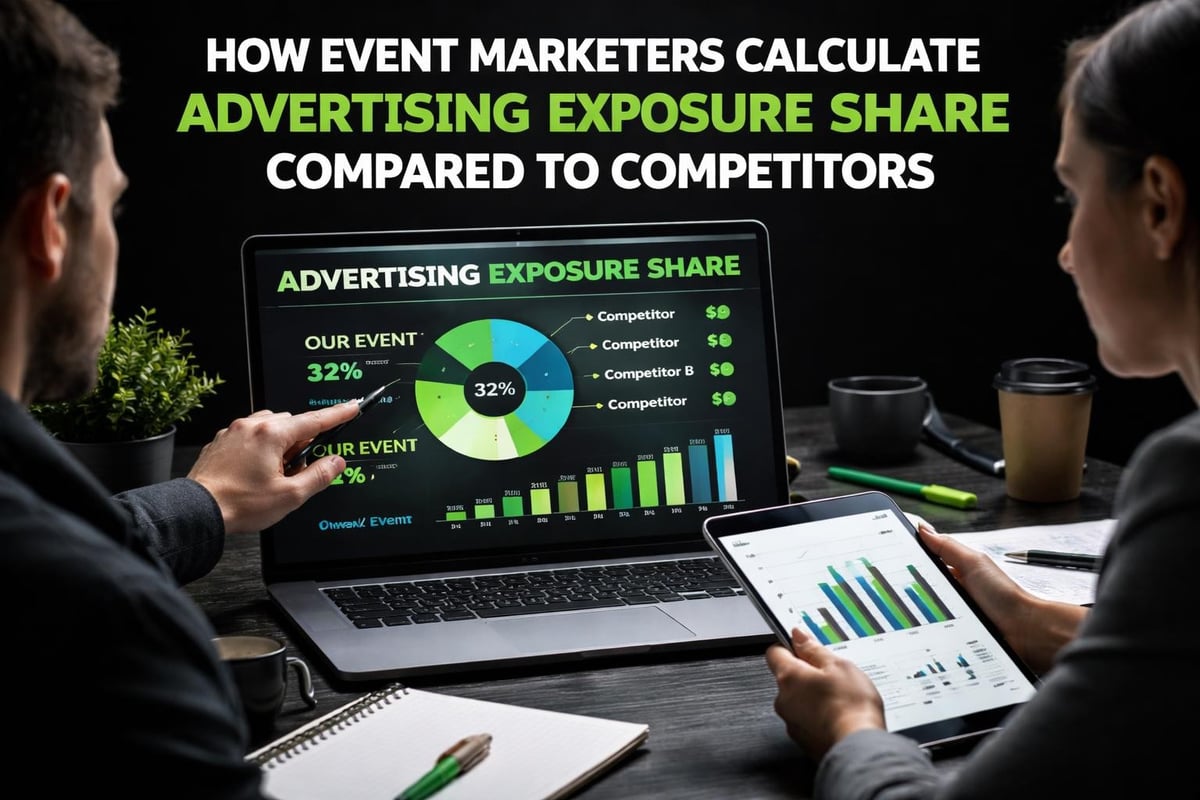
Event marketers should analyze:
- Total advertising spending across relevant channels
- Frequency and reach compared to similar events
- Quality of creative executions and their engagement rates
- Seasonal timing and market saturation levels
Higher advertising exposure doesn't always require larger budgets. Strategic targeting, compelling creative, and optimal timing can maximize exposure efficiency even with limited resources.
Advanced Exposure Strategies for Event Success
Modern event marketing demands sophisticated approaches to advertising exposure that go beyond basic frequency goals. Addressable TV advertising demonstrates how precise targeting can improve campaign efficiency and return on ad spend, principles that apply across all event promotion channels.
Creating Layered Exposure Campaigns
Successful event marketers structure campaigns with complementary exposure patterns:
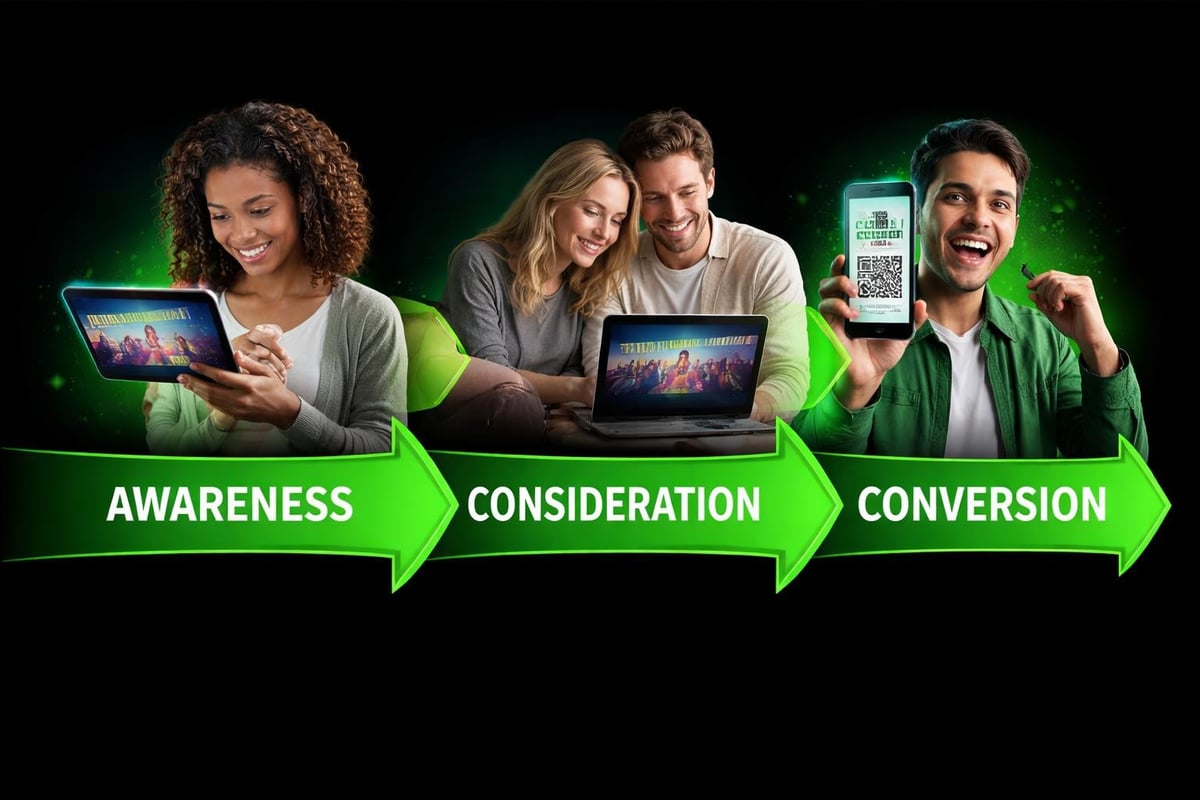
Awareness Phase: Broad reach with moderate frequency builds initial recognition among potential attendees. Creative focuses on event highlights and unique value propositions.
Consideration Phase: Increased frequency with targeted messaging addresses specific audience interests and concerns. Advertising exposure intensifies for high-intent segments showing engagement.
Conversion Phase: Maximum exposure with urgency messaging and social proof drives final ticket purchases. Retargeting ensures qualified prospects receive sufficient touchpoints to overcome hesitation.
| Campaign Phase | Weekly Exposure Target | Primary Channels | Content Focus |
|---|---|---|---|
| Awareness | 3-5 impressions | Social, Display | Event highlights |
| Consideration | 6-10 impressions | Video, Social, Email | Detailed information |
| Conversion | 10-15 impressions | Retargeting, Search | Urgency, offers |
This structured approach ensures advertising exposure builds progressively rather than randomly, creating a cohesive journey toward ticket purchase.
Measuring Exposure Impact on Event Outcomes
Tracking advertising exposure effectiveness requires connecting visibility metrics to actual business results. Event marketers should monitor:
- Correlation between exposure frequency and ticket sales velocity
- Attribution models showing which touchpoints drive conversions
- Audience quality metrics indicating engagement levels
- Cost-per-exposure efficiency across different channels
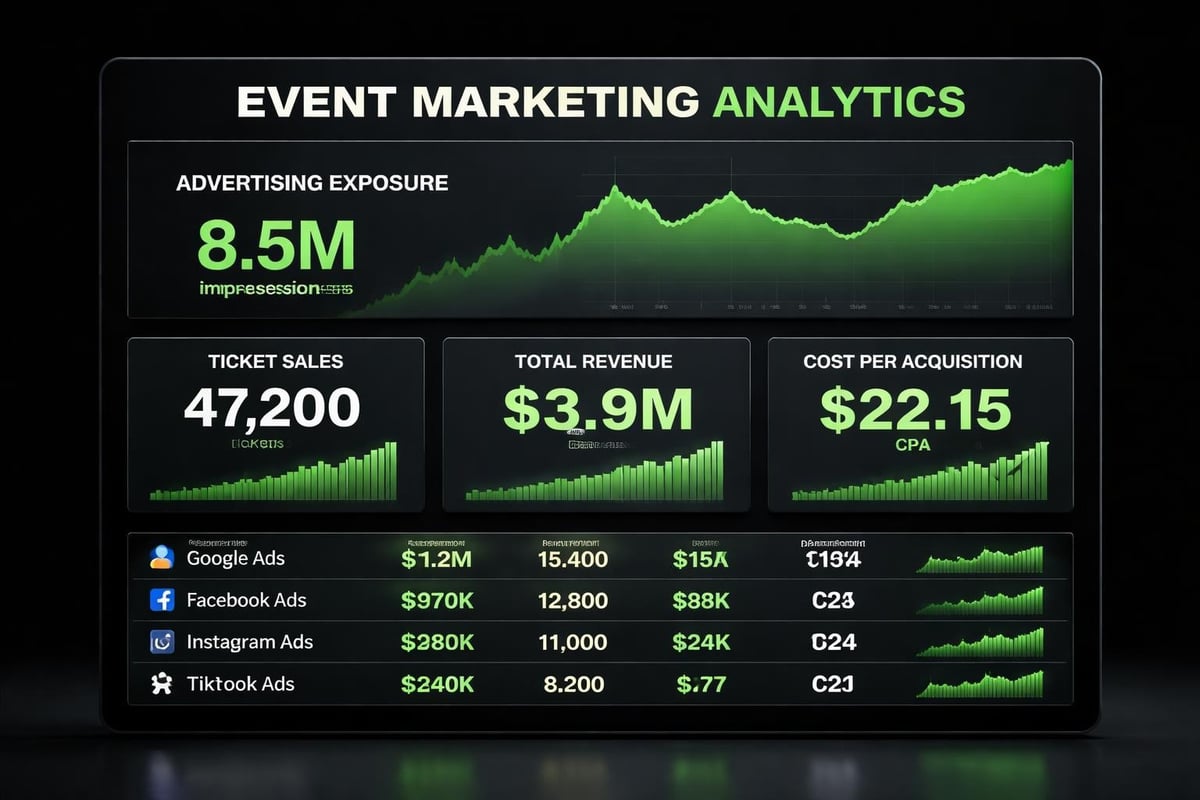
Advanced analytics platforms enable real-time optimization, allowing marketers to adjust exposure levels based on performance data. This dynamic approach prevents wasted spend while ensuring sufficient visibility to meet ticket sales goals.
Studies examining how high exposure to advertising affects memory and perception reveal important considerations for event marketers. Excessive advertising exposure can trigger defensive responses, making audiences less receptive to messaging. The optimal balance maintains visibility without creating negative associations.
Integrating Exposure Planning Into Event Strategy
Successful event marketing begins with advertising exposure planning during the initial strategy phase. This proactive approach ensures sufficient budget allocation, appropriate channel selection, and realistic timeline development.
Event marketers should document:
- Target exposure levels for each audience segment
- Channel mix designed to deliver required frequency
- Creative rotation strategies preventing fatigue
- Budget allocation supporting exposure goals
- Measurement frameworks tracking exposure impact
This systematic planning transforms advertising exposure from an afterthought into a strategic advantage that drives measurable event success.
Effective event promotion requires strategic management of advertising exposure that balances visibility, frequency, and audience receptivity. By understanding exposure metrics and optimization techniques, you can dramatically improve ticket sales and brand awareness while maximizing marketing efficiency. Greenslant provides comprehensive event marketing solutions with advanced tracking capabilities, multi-channel advertising, and expert creative production to ensure your events achieve optimal exposure and maximum success.