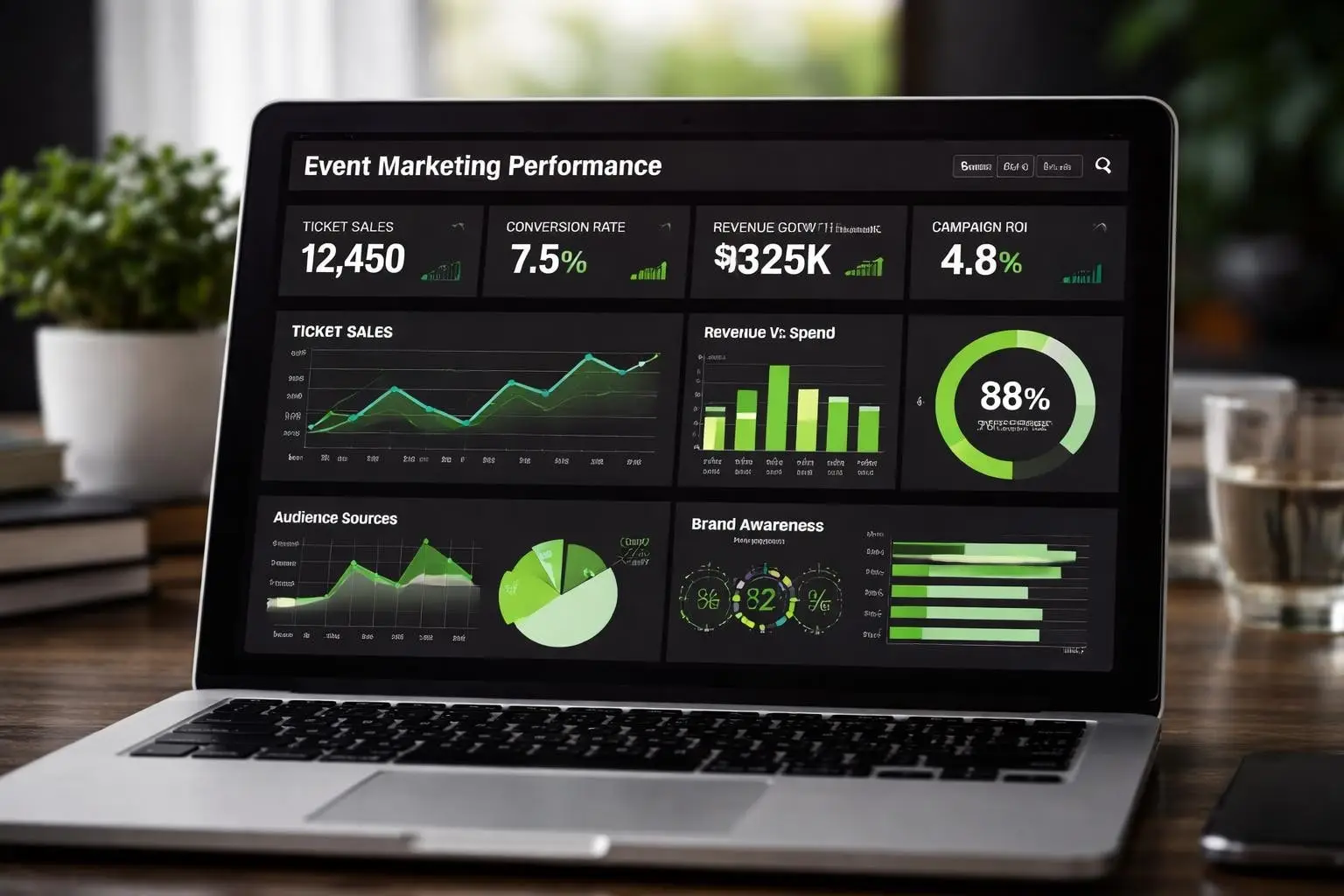
The relationship between marketing and revenue represents one of the most critical connections in event management. For event organizers, understanding how marketing investments translate into ticket sales, registrations, and ultimately revenue determines the difference between sold-out venues and empty seats. In 2026, successful event promotion requires a data-driven approach that connects every marketing dollar to measurable financial outcomes.
Understanding the Direct Impact of Marketing on Event Revenue
Marketing doesn't just create awareness-it drives tangible financial results. Strategic marketing impacts your profit and loss statements in ways that extend beyond simple ticket sales. When executed effectively, marketing and revenue work in tandem to create a sustainable growth cycle for events.
The connection between marketing efforts and financial performance includes several measurable components:
- Immediate ticket sales from promotional campaigns
- Brand equity that supports premium pricing strategies
- Customer lifetime value through repeat attendee cultivation
- Sponsorship opportunities amplified by audience reach
- Post-event revenue from recordings, merchandise, and future events
Measuring Marketing ROI for Events
Tracking return on investment remains essential for optimizing marketing and revenue generation. Event organizers should establish clear metrics before launching campaigns. Using platforms like advanced tracking tools enables precise attribution of ticket sales to specific marketing channels.
| Metric | What It Measures | Why It Matters |
|---|---|---|
| Cost Per Acquisition | Marketing spend divided by tickets sold | Identifies most efficient channels |
| Conversion Rate | Visitors who purchase tickets | Shows landing page effectiveness |
| Average Order Value | Revenue per transaction | Indicates pricing strategy success |
| Customer Lifetime Value | Total revenue per attendee over time | Guides retention investment decisions |
Strategic Channels That Drive Event Revenue
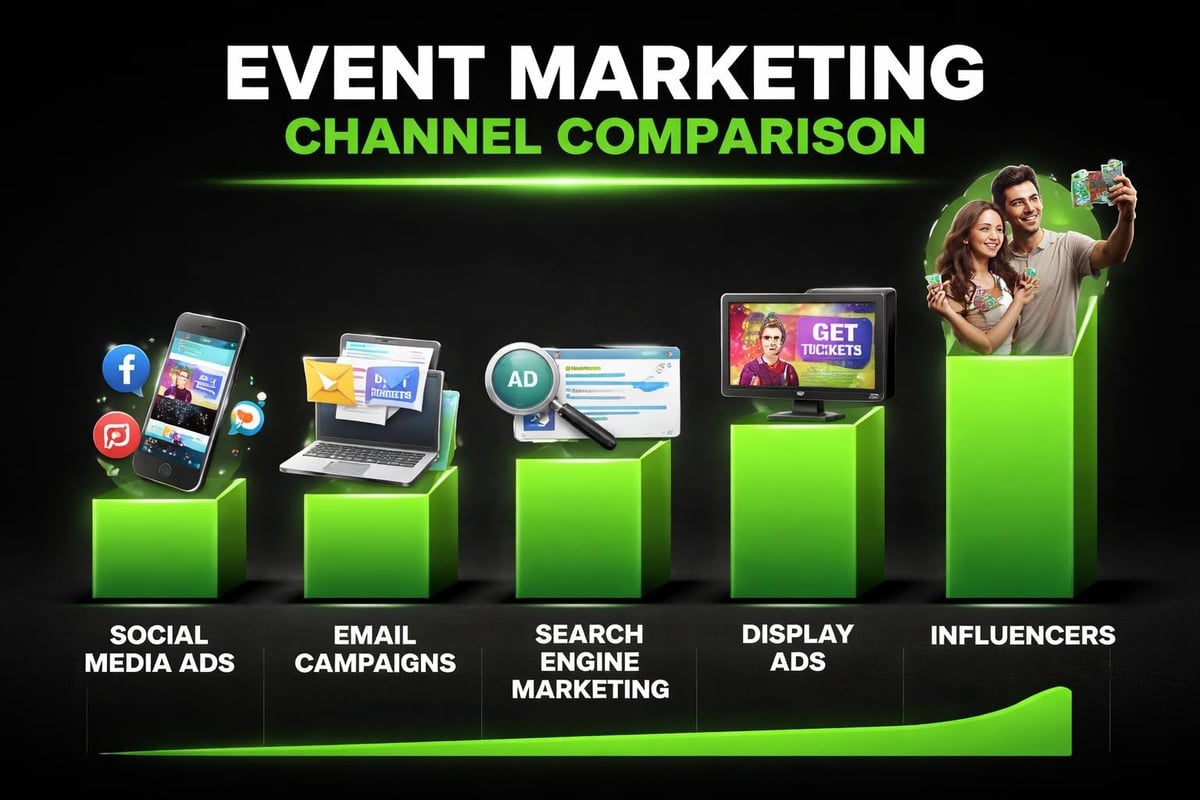
Different advertising channels deliver varying returns for event marketing. The key lies in selecting channels that align with your audience demographics and event type. Expanding your online presence across multiple platforms creates more touchpoints for potential attendees.
Paid Advertising Approaches
Paid channels offer immediate visibility and scalable results. Social media platforms enable precise audience targeting based on interests, behaviors, and demographics. Programmatic advertising platforms automate media buying to reach high-intent audiences efficiently.
Search engine marketing captures people actively looking for events in your category. Display advertising builds awareness across relevant websites and apps. The relationship between marketing and revenue becomes clearer when you track which channels generate qualified leads versus those that simply drive traffic.
Organic Growth Strategies
Content marketing establishes authority while attracting organic traffic. Email marketing maintains relationships with past attendees and nurtures prospects toward conversion. Marketing benefits extend beyond immediate sales to include community building and brand loyalty.
Building high-converting landing pages transforms traffic into ticket purchases. These dedicated pages remove distractions and guide visitors toward a single conversion goal.
Optimizing Creative Assets for Maximum Conversion
Creative production quality directly influences conversion rates and revenue generation. Professional visuals, compelling copy, and clear calls-to-action separate successful campaigns from underperforming ones. Testing different creative variations reveals what resonates with your target audience.
Key creative elements that impact revenue:
- Headline clarity that communicates value immediately
- Visual appeal through professional photography and videography
- Social proof including testimonials and attendance numbers
- Urgency triggers like countdown timers and limited availability
- Mobile optimization ensuring seamless mobile experiences
Data-Driven Decision Making in Event Marketing
Analytics transform marketing from guesswork into science. Companies increasingly measure both short-term and long-term marketing impact to justify budgets and refine strategies. For events, this means tracking metrics from initial impression through post-event engagement.
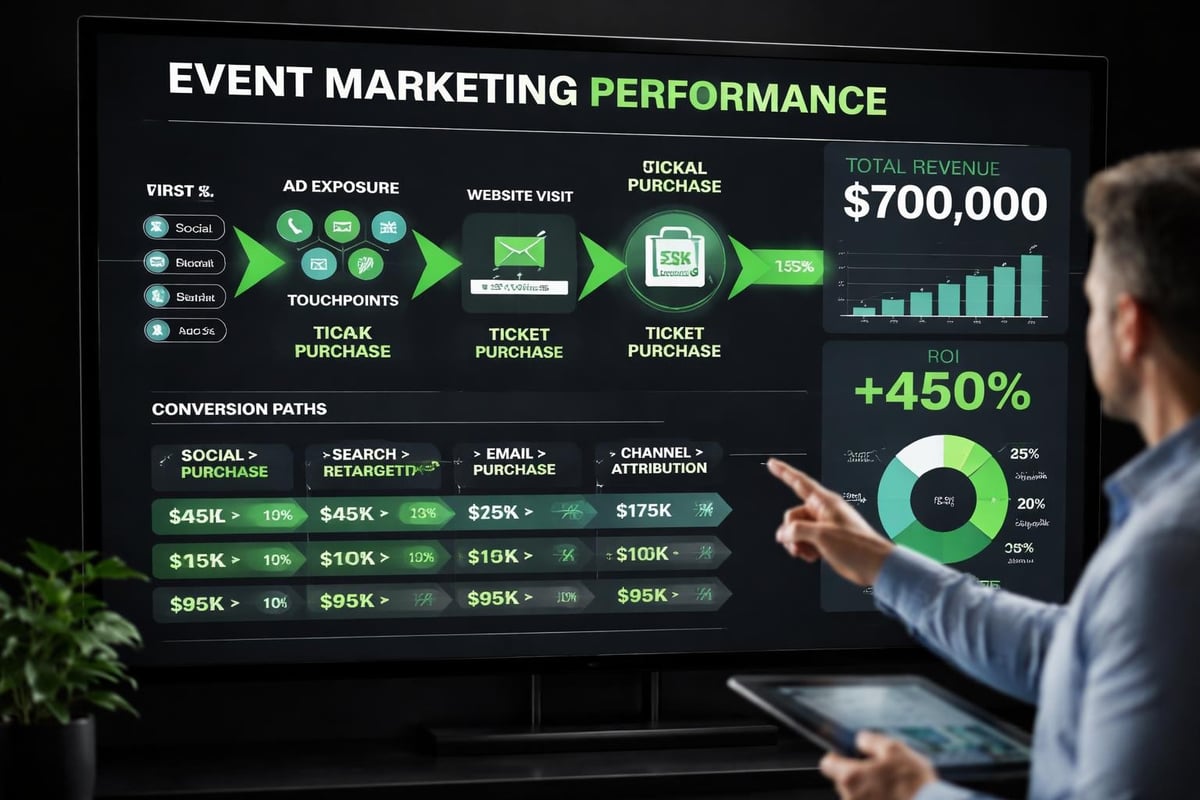
Advanced methodologies like uplift modeling help marketers understand incremental revenue generated by specific campaigns. This approach isolates marketing's true impact by comparing outcomes between exposed and unexposed audience segments.
Attribution Modeling for Events
Multi-touch attribution reveals how different marketing interactions contribute to ticket sales. First-touch attribution credits the initial discovery point. Last-touch attributes the sale to the final interaction before purchase. Linear attribution distributes credit equally across all touchpoints.
Understanding attribution helps allocate budgets effectively. If social media drives awareness but email closes sales, both deserve appropriate investment.
Pricing Strategy and Marketing Alignment
The intersection of marketing and revenue includes strategic pricing decisions. Early bird discounts create urgency and generate cash flow. Tiered pricing offers options for different buyer segments. Dynamic pricing adjusts based on demand and inventory.
| Pricing Strategy | Marketing Approach | Revenue Impact |
|---|---|---|
| Early Bird | Scarcity messaging, countdown timers | Accelerates sales, improves cash flow |
| Tiered Options | Benefit comparison, value highlighting | Increases average order value |
| Group Discounts | Referral programs, social sharing | Expands reach, reduces acquisition cost |
| VIP Packages | Exclusivity messaging, premium positioning | Maximizes per-attendee revenue |
Marketing communicates pricing value effectively. When audiences understand what they receive for their investment, conversion rates improve. Effective marketing strategies emphasize value over price, reducing price sensitivity.
Retargeting and Revenue Recovery
Most visitors don't purchase during their first interaction. Retargeting campaigns recapture lost opportunities by reminding interested prospects about your event. These campaigns typically deliver higher conversion rates because they target warm audiences.
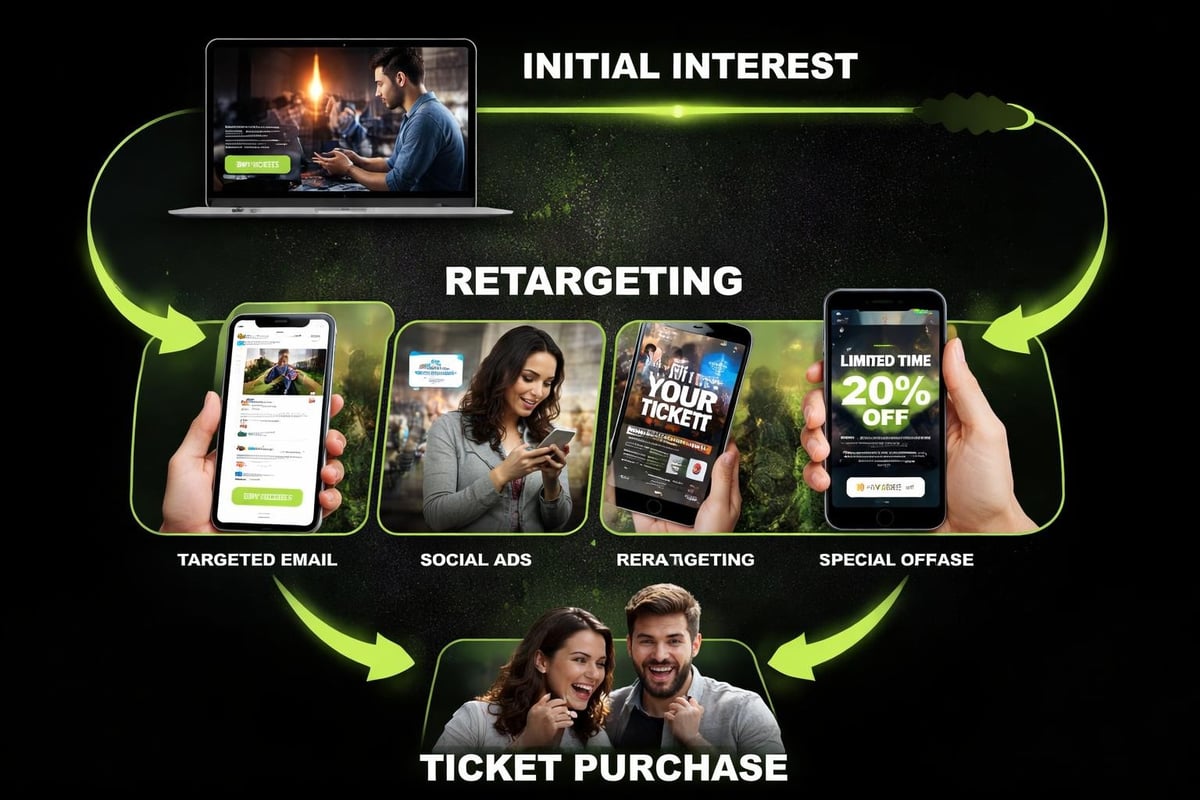
Email sequences nurture leads with valuable content before asking for the sale. Abandoned cart campaigns recover revenue from people who started but didn't complete registration. Both tactics strengthen the connection between marketing and revenue by maximizing return from existing traffic.
Tools like Deadline Funnel create authentic urgency through personalized countdown timers. This approach respects individual customer journeys while motivating timely decisions.
Building Long-Term Revenue Through Brand Marketing
While direct response marketing drives immediate sales, brand marketing builds lasting value. Successful events become recognized brands that command premium pricing and generate organic demand. This long-term approach to marketing and revenue creates sustainable competitive advantages.
Consistency across all touchpoints reinforces brand identity. From email marketing platforms to social media presence, unified messaging builds recognition and trust. Strong brands reduce customer acquisition costs over time as awareness grows.
Strategic marketing and revenue optimization transform event outcomes from uncertain to predictable. By implementing data-driven campaigns, optimizing creative assets, and maintaining focus on measurable results, event organizers create sustainable growth trajectories. Greenslant specializes in comprehensive event marketing solutions that connect advertising channels, creative production, and advanced tracking to maximize ticket sales and revenue performance for events of all sizes.