
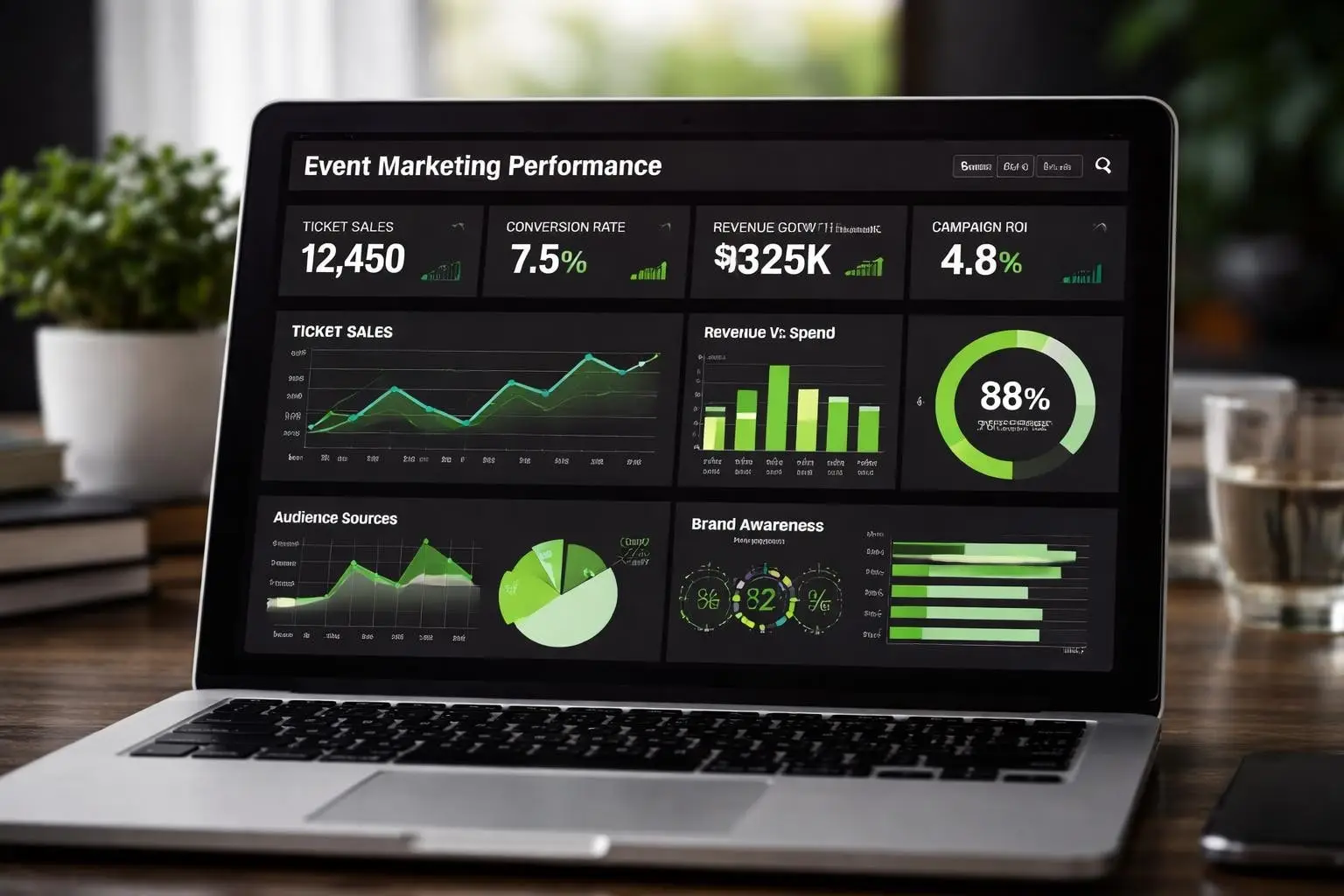
Running a successful event marketing campaign requires more than creative advertising and compelling content. Understanding which agency metrics to track determines whether your campaigns drive real ticket sales or simply generate impressions that don't convert. For event organizers and marketing professionals, measuring the right performance indicators means the difference between selling out venues and struggling to fill seats.
Why Agency Metrics Matter for Event Marketing
Event marketing operates in a unique environment where success is binary: either attendees show up or they don't. Unlike ongoing product sales, events have fixed dates and capacity limits that create urgency but also risk.
Tracking the right metrics helps you:
- Identify which advertising channels generate actual ticket buyers
- Allocate budget efficiently across creative production and media spend
- Justify marketing investments to stakeholders and event organizers
- Optimize campaigns in real-time before event dates pass
The comprehensive tracking approach outlined by PRCA emphasizes measuring outputs, outcomes, and impact, which directly applies to event marketing where impressions, conversions, and revenue each tell different parts of the story.
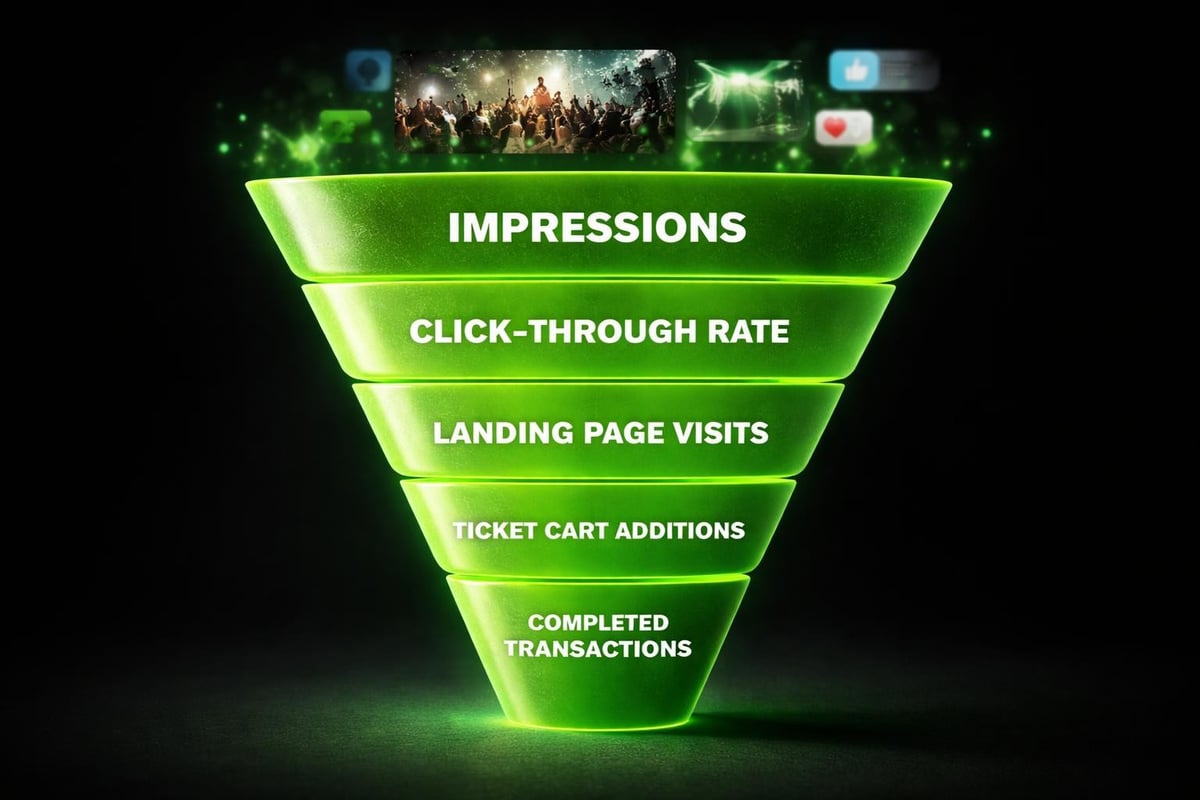
Core Performance Indicators for Event Campaigns
Revenue and Conversion Metrics
Ticket sales revenue stands as the ultimate measure of event marketing success. However, breaking down this metric reveals deeper insights.
| Metric | What It Measures | Why It Matters |
|---|---|---|
| Cost Per Acquisition (CPA) | Marketing spend divided by tickets sold | Determines campaign profitability |
| Conversion Rate | Percentage of visitors who purchase tickets | Reveals landing page and offer effectiveness |
| Average Order Value | Revenue per transaction | Shows upsell success for VIP and group tickets |
| Return on Ad Spend (ROAS) | Revenue generated per dollar spent | Guides budget allocation decisions |
Monitoring these indicators through effective KPI dashboards allows real-time adjustments. When targeting event audiences, conversion windows are often tight, making rapid optimization critical.
Audience Engagement Measurements
Brand awareness metrics predict long-term success beyond individual events. These agency metrics include social media engagement rates, email open rates, and website traffic patterns.
For recurring events or festival series, tracking year-over-year audience growth demonstrates brand strength. A sold-out event in 2026 built on strong 2025 awareness campaigns proves the compound value of consistent marketing investment.
Key engagement indicators include:
- Social media reach and shares
- Email list growth rate
- Website returning visitor percentage
- Content engagement duration
- Video completion rates
Attribution and Channel Performance
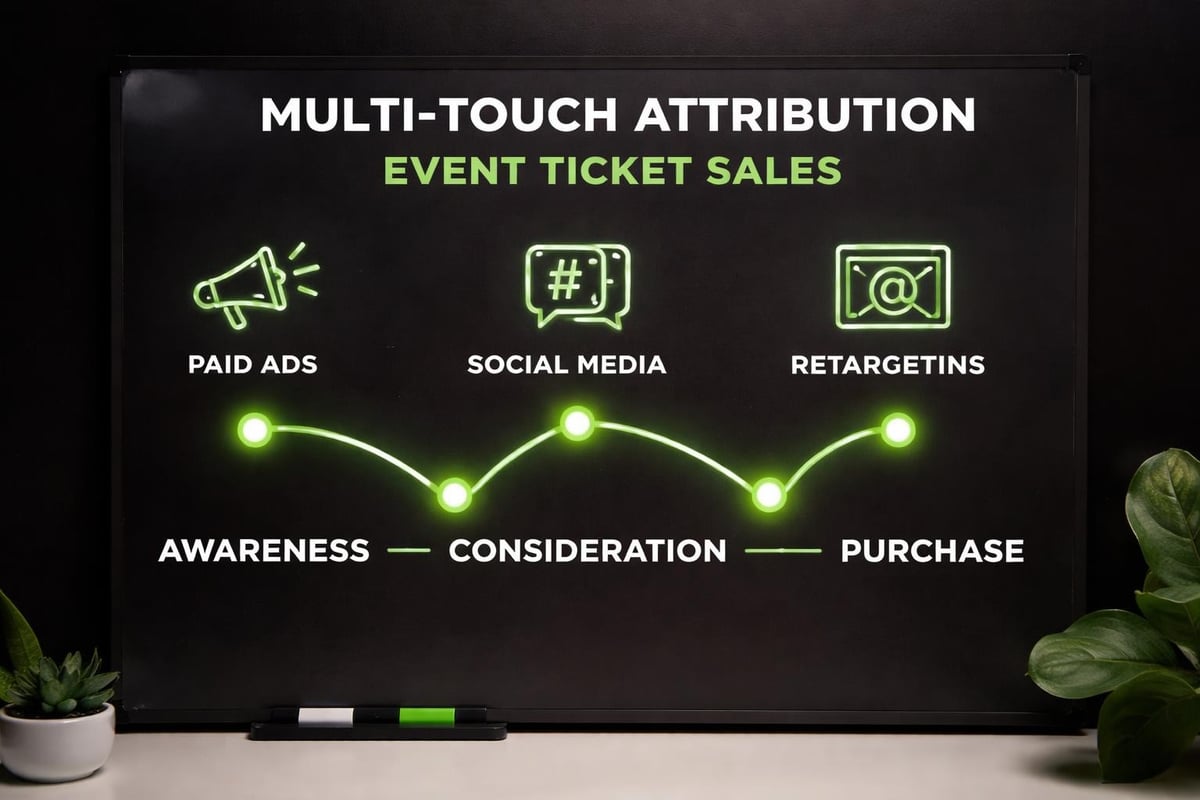
Understanding which marketing channels drive ticket sales separates effective agencies from those wasting budget. Multi-touch attribution becomes especially important when event attendees interact with multiple touchpoints before purchasing.
Tracking Cross-Channel Performance
Modern event marketing campaigns typically span paid advertising, social media, email, influencer partnerships, and content marketing. Monitoring campaign performance across channels requires integrated tracking systems that connect online interactions to offline attendance when applicable.
First-touch attribution shows which channels create initial awareness, while last-touch reveals what closes the sale. For events, mid-funnel touches often include email reminders and retargeting ads that deserve credit in the conversion path.
The comprehensive agency metrics guide highlights customer lifetime value as a crucial KPI. For events, this translates to repeat attendee rates and the value of building loyal audiences who purchase tickets to multiple events throughout the year.
Operational Efficiency Metrics
Beyond campaign performance, internal agency metrics determine profitability and scalability. Even successful ticket sales campaigns can lose money if operational inefficiencies drain resources.
Resource Utilization and Profitability
The agency profitability metrics outlined by WordStream emphasize utilization rate, which measures how effectively team members spend billable hours versus administrative tasks. For event marketing agencies, this metric affects whether campaigns remain profitable at scale.
Critical operational metrics include:
- Utilization Rate: Percentage of time spent on revenue-generating work
- Project Profit Margin: Revenue minus direct costs per campaign
- Client Acquisition Cost: Investment required to secure new event clients
- Client Retention Rate: Percentage of clients booking repeat campaigns
- Average Project Value: Revenue per event marketing engagement
Creating effective landing page campaigns that convert efficiently reduces the time and cost required to achieve ticket sales goals, improving both client results and agency profitability.
Real-Time Reporting and Adjustment
Static monthly reports don't serve event marketing well. When ticket sales lag with weeks remaining before an event, agencies need immediate visibility into performance drops.
Building Responsive Dashboards
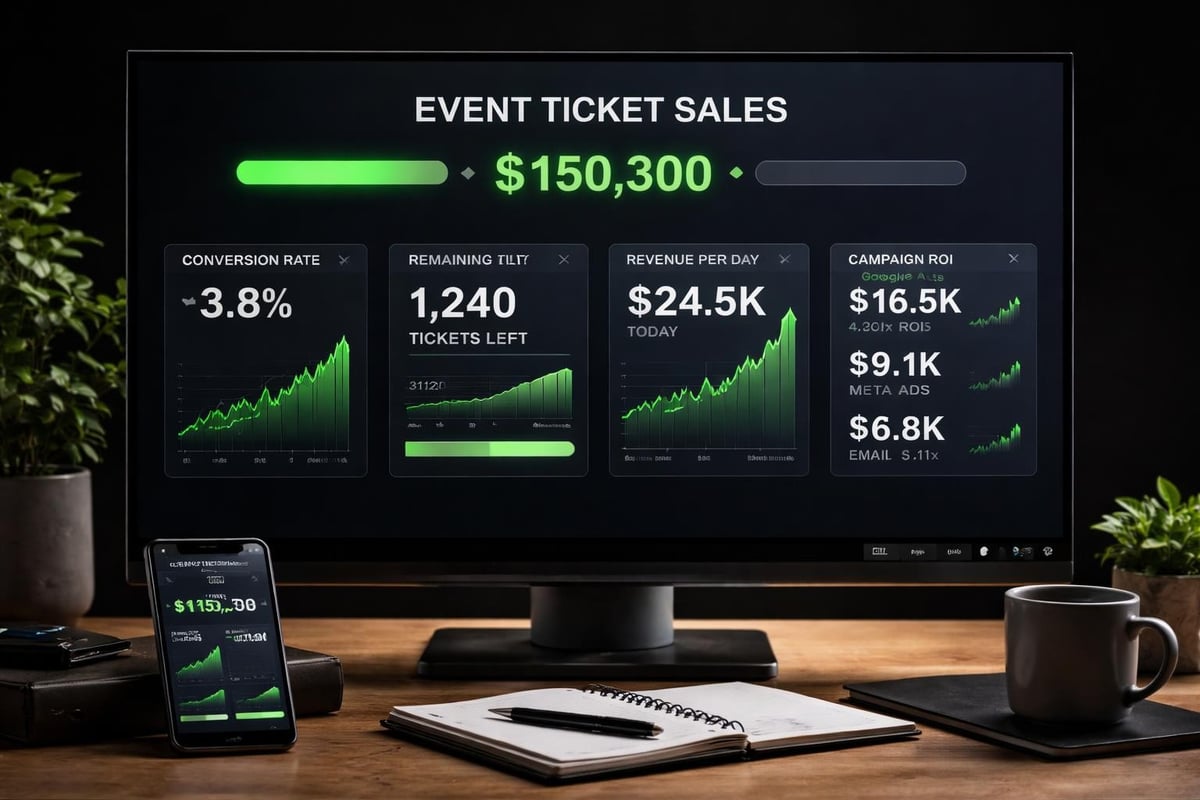
Automated dashboards should update hourly during active campaigns, showing:
- Current ticket sales versus projections
- Daily ad spend and CPA trends
- Top-performing creative assets
- Geographic and demographic conversion patterns
- Inventory warnings for near-capacity events
This real-time visibility enables rapid creative refreshes, budget reallocation, and targeting adjustments. The strategic business planning resources from industry associations emphasize how consistent metric tracking identifies improvement opportunities before they become crises.
Benchmarking Against Industry Standards
Understanding whether your agency metrics indicate strong performance requires context. Event marketing benchmarks vary by event type, audience size, and ticket price point.
| Event Type | Typical Conversion Rate | Average CPA Range | ROAS Target |
|---|---|---|---|
| Local Community Events | 3-5% | $15-$30 | 4:1 minimum |
| Regional Conferences | 1.5-3% | $50-$150 | 3:1 minimum |
| Major Festivals | 2-4% | $30-$80 | 5:1 minimum |
| Virtual Events | 4-8% | $10-$25 | 6:1 minimum |
These benchmarks help set realistic goals and identify when performance significantly exceeds or falls short of expectations. Agencies should track their metrics against both industry standards and their own historical performance to demonstrate continuous improvement.
Advanced Tracking Capabilities
Sophisticated event marketers implement tracking beyond basic sales metrics. Post-event surveys measuring attendee satisfaction, social sentiment analysis during events, and sponsor ROI calculations all contribute to comprehensive agency metrics that inform future strategies.
Understanding the complete picture through virtual events and hybrid formats adds complexity to measurement but also opportunities for more granular tracking than purely physical events allow.
Customer lifetime value calculations become particularly valuable when working with event series, festival organizations, or venues hosting multiple annual events. An attendee acquired through 2026 marketing efforts might generate ticket revenue for years, making initial acquisition costs more palatable when viewed through this longer lens.
Mastering agency metrics transforms event marketing from guesswork into a predictable, scalable system that consistently delivers sold-out events and measurable ROI. By tracking the right combination of revenue, engagement, attribution, and operational metrics, marketing teams gain the insights needed to optimize every campaign element. Greenslant specializes in event marketing solutions that combine comprehensive tracking, multi-channel advertising, and creative production to help events maximize ticket sales and brand awareness through data-driven strategies.