
In 2026, marketers and brands find themselves navigating a landscape where adtech and martech often seem indistinguishable. The rapid evolution of both fields has left many wondering where the boundaries truly lie and how to make the most of each.
This article cuts through the confusion by clearly unpacking the differences between adtech and martech. You’ll discover how each powers different parts of the customer journey, from technology and data strategies to billing models and target audiences.
Ready to get clarity? By the end, you’ll have practical insights to help you choose, integrate, and maximize the right tools for your marketing goals.
Defining Adtech and Martech in 2026
In 2026, understanding the difference between adtech and martech is more critical than ever. As the digital landscape evolves, many marketers find themselves navigating a crowded field of platforms and solutions.
Adtech refers to the technologies and platforms designed to automate, optimize, and measure digital advertising. This includes tools like demand-side platforms (DSPs), supply-side platforms (SSPs), and ad exchanges, all of which help brands reach new audiences and maximize media spend.
Martech, on the other hand, encompasses tools and software that manage customer relationships, automate marketing activities, and optimize campaigns. Popular martech solutions include CRM systems, email automation, and analytics platforms. The martech ecosystem has exploded, with more than 14,000 solutions available by 2024, supporting brands as they deliver cross-channel, personalized marketing experiences. For a deeper look at essential martech platforms, see CRM and customer data tools.
Here’s a quick comparison of adtech and martech in table form:
| Feature | Adtech | Martech |
|---|---|---|
| Core Purpose | Digital advertising automation | Marketing management & automation |
| Data Focus | Third-party, anonymous data | First-party, customer data |
| Example Tools | DSP, SSP, ad exchanges | CRM, email automation, analytics |
| Main Outcome | Reach & acquisition | Retention & engagement |
For example, martech tools are often used to drive personalized email campaigns across channels, while adtech platforms power programmatic ad buying to acquire new leads.
Both adtech and martech are essential in the modern marketing toolkit, but they play distinct roles in the customer journey. According to StackAdapt, 28.8% of US ad agencies use between six and seven adtech and martech tools, while 17.3% rely on more than ten. These definitions matter because they inform strategic planning and help brands make smarter choices about their tech stack and future investments.

Core Functions and Platform Differences
Understanding the core functions of adtech and martech is essential for building an effective marketing technology stack. Each serves a distinct purpose, yet their platforms often intersect as brands strive for seamless customer experiences.
Martech: Building Relationships and Driving Engagement
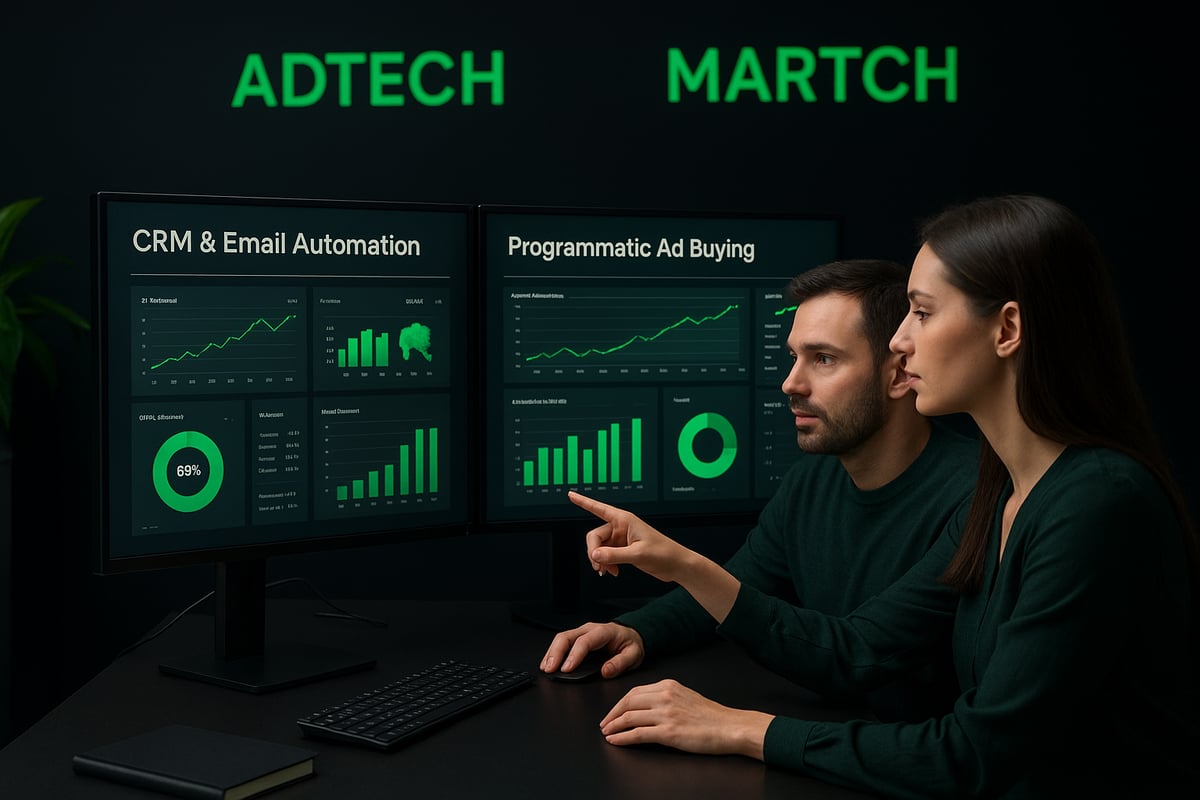
Martech platforms help brands nurture leads, manage customer data, and automate campaigns to boost engagement. Examples include CRM systems, customer data platforms (CDPs), marketing automation software, email marketing tools, SEO platforms, and social media management solutions.
These tools empower marketers to personalize communications, track user journeys, and increase customer retention. The ability to foster long-term loyalty is a defining strength of adtech and martech in today's landscape.
Adtech: Maximizing Reach and Optimizing Acquisition
Adtech platforms are designed to automate the buying, targeting, and delivery of digital ads. Common examples are demand-side platforms (DSPs), supply-side platforms (SSPs), ad exchanges, ad servers, search engine marketing (SEM) platforms, and ad verification tools.
The primary focus here is on campaign execution, attribution, and maximizing the efficiency of media spend. Adtech and martech complement each other, with adtech driving new customer acquisition and initial impressions across paid media.
Overlapping and Unique Platforms
Some platforms, such as data management platforms (DMPs), bridge both adtech and martech by centralizing audience data for activation across channels. Others are unique: email automation belongs to martech, while ad networks are strictly adtech. For example, SEM platforms focus solely on digital advertising, whereas web analytics and personalization platforms support martech needs.
Understanding platform roles and leveraging the right analytics and attribution platforms is crucial. This helps brands avoid redundant investments and ensures that adtech and martech work together for optimal results.
Data Strategies and Audience Targeting
Data sits at the heart of both adtech and martech, shaping how brands connect with audiences and optimize campaigns. In 2026, having the right data strategy can be the difference between a fragmented customer experience and a seamless journey.
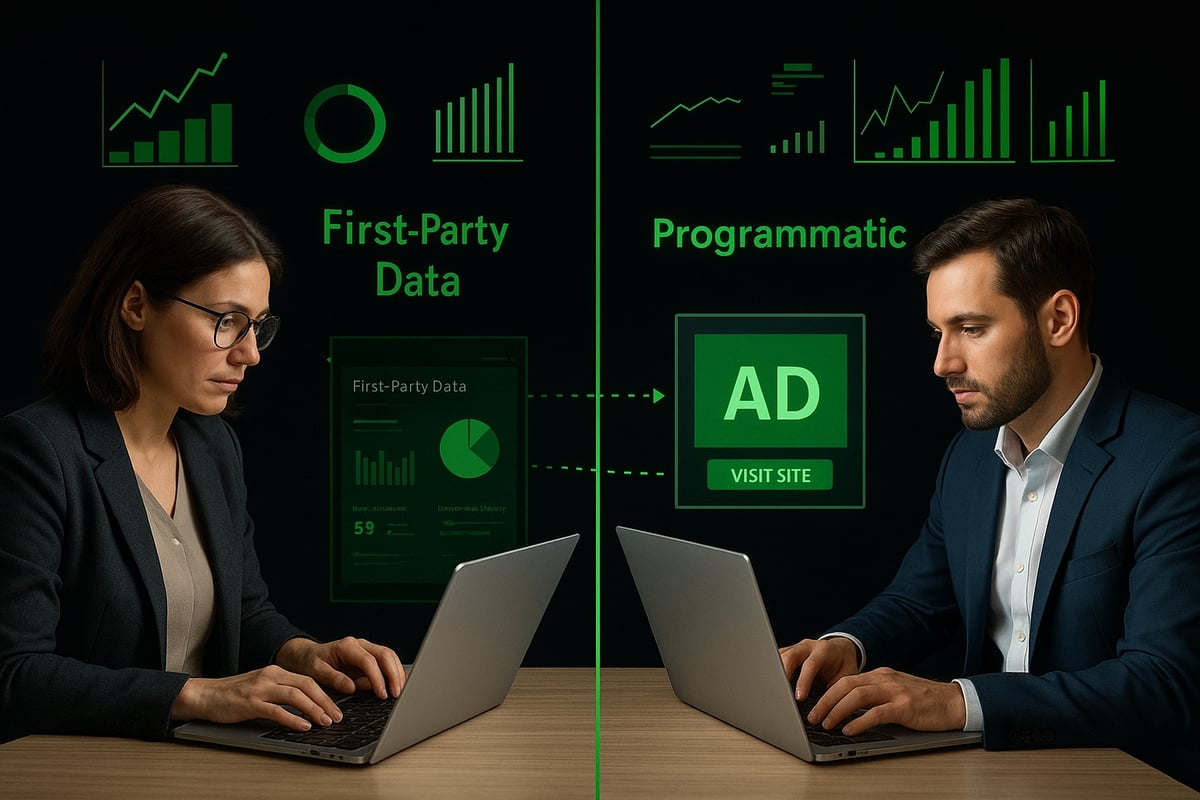
Martech platforms primarily harness first-party data, such as customer emails, behavioral signals, and CRM profiles. This enables personalized content, automated nurturing, and retention efforts. Brands use customer data platforms (CDPs) to gather and unify these insights, ensuring every message feels tailored to the individual.
In contrast, adtech has traditionally leaned on third-party data, like cookies and anonymous user profiles, to find new prospects and maximize reach. However, with privacy rules tightening and third-party cookies fading out, adtech and martech strategies are evolving fast. Contextual targeting is becoming the norm, and brands are investing in first-party data to power compliant, effective advertising.
To illustrate, a CDP now often serves as the bridge, collecting data from web, email, and ad campaigns, then activating it across both adtech and martech platforms. This unified approach supports seamless cross-channel measurement and targeting.
A recent data point shows that 60% of marketers planned to increase martech investment in 2024, highlighting the growing focus on data-driven personalization. Integrating data across platforms is now essential for tracking the customer journey and measuring campaign success.
As brands rethink data governance, the convergence of adtech and martech is accelerating. To stay ahead, many are prioritizing secure, integrated data strategies that future-proof their marketing efforts. For deeper insight into these trends, check out Future Trends in AdTech and MarTech: Navigating the 2025 Landscape.
Billing Models and Commercial Structures
Understanding how adtech and martech handle billing is essential for brands looking to maximize value and streamline marketing budgets. Both have distinct commercial structures that reflect their core functions and risk allocation.

Billing Comparison Table
| Feature | Adtech | Martech |
|---|---|---|
| Pricing Model | Commission on media spend, CPM fees | SaaS/subscription, pay-per-month |
| Common Example | 10% fee, $0.10 CPM, minimum spend | Tiered plans, user-based pricing |
| Payment Structure | Variable, tied to ad spend | Predictable, fixed monthly/annual |
| Risk Allocation | Cost linked to campaign results | Cost linked to platform access |
Many adtech vendors still charge a percentage of media spend, such as a 10% commission or a flat CPM fee. For example, a demand-side platform (DSP) may require both a commission and a minimum monthly commitment, like $2,000.
By contrast, martech solutions typically use subscription-based pricing, offering brands a predictable monthly or annual fee. This makes budgeting easier for teams focused on long-term marketing strategies.
Some adtech vendors now provide SaaS-style pricing, blurring the lines between adtech and martech commercial models. However, minimum spend requirements are still common in adtech, reflecting the performance-driven nature of digital advertising. For more on how digital ad spend impacts these models, see Ad expenditure trends.
Predictable pricing in martech encourages wider adoption, especially for brands seeking to manage costs. In 2026, understanding the differences in billing between adtech and martech is crucial for aligning spend with expected ROI and making informed decisions about technology investments.
Target Audiences and Customer Journey Roles
Understanding target audiences is essential for navigating the unique functions of adtech and martech. Each plays a distinct role in guiding prospects and customers through the marketing funnel.
Adtech: Prospecting and Brand Awareness
Adtech and martech platforms approach audiences differently. Adtech focuses on reaching unknown or broad audiences using anonymous data and behavioral insights. Its strength lies in paid media channels such as display, video, and search engine marketing. Marketers often use adtech for programmatic campaigns to acquire new leads or boost awareness during product launches. This approach is optimized for visibility and conversion at scale.
Martech: Nurturing and Retention
Martech, in contrast, emphasizes engagement with known customers or leads. It uses personal data to deliver tailored messages through owned channels like email, social media, and websites. Examples include automated email sequences triggered by customer actions, loyalty initiatives, or post-purchase follow-ups. Martech’s primary goal is to foster long-term relationships and maximize customer lifetime value through personalized communication.
Media and Intermediaries
Adtech typically involves agencies and intermediaries managing campaigns, while martech platforms are often run directly by brands. For a deeper look at this evolving landscape, explore Martech, Adtech, and Sales Tech: Are They Converging?. Channel structure directly affects data flow, control, and measurement strategies.
The Convergence of Adtech and Martech
The convergence of adtech and martech is reshaping the marketing landscape in 2026. As brands strive to deliver seamless customer experiences, the need to unify strategies across both domains has become urgent. Marketers now recognize that siloed data and fragmented processes can hinder performance and limit ROI.
Several factors are fueling this convergence:
- Demand for unified customer journeys
- Advances in AI and automation
- Centralization of first- and third-party data
- Pressure to reduce resource waste
Hybrid platforms are emerging, often called “madtech,” which blend the targeting power of adtech with the personalization strengths of martech. For example, an e-commerce brand might use adtech tools to acquire new customers, then switch to martech solutions for personalized retargeting and loyalty campaigns. According to a Forrester study, misalignment between adtech and martech can waste up to 13% of marketing resources, highlighting the real financial impact of disconnected systems.
The benefits of convergence are clear: holistic measurement, consistent messaging, and improved efficiency across touchpoints. However, challenges remain. Data silos, tech stack complexity, and evolving privacy regulations require brands to rethink integration and governance.
Looking ahead, further consolidation and smarter, AI-powered solutions are expected to bridge the gap even more. The role of AI in this process is set to expand, making unified strategies possible across the entire lifecycle. For a deeper dive into how AI is driving this shift, see Predictions 2026: How AI Will Redefine Marketing. As the boundaries between adtech and martech continue to blur, brands that embrace convergence will be best positioned for future success.
The Role of AI and Automation in 2026
Artificial intelligence and automation have become the backbone of both adtech and martech by 2026. These technologies are no longer optional, but essential for marketers who want to stay competitive and efficient in a rapidly evolving landscape.
In martech, AI is used to personalize content, forecast customer behavior, and automate complex workflows. Platforms now leverage machine learning to deliver hyper-relevant messaging and optimize every customer interaction. For a deeper dive into how AI enhances marketing automation, check out this guide on AI in event marketing.
Adtech is also transformed by AI, which powers real-time bidding, dynamic creative optimization, and smarter audience targeting. Algorithms analyze massive data sets instantly to boost ad performance and minimize wasted spend.
Here are some ways AI and automation are shaping adtech and martech:
- Predictive analytics for campaign optimization
- Automated segmentation and audience discovery
- AI-driven DSPs that adjust bids based on real-time conversion data
- Martech platforms that trigger personalized emails and offers automatically
According to StackAdapt and Ascend2, 60% of marketers now use AI for campaign optimization. The convergence of adtech and martech is accelerating as AI enables unified customer journeys and smarter, cross-channel insights.
Looking ahead, expect democratized AI tools and even more automation, making adtech and martech ecosystems more accessible and powerful for brands of every size.
Now that you’ve seen how adtech and martech are evolving and where they intersect in 2026, it’s clear that understanding these differences is key to maximizing your event marketing success. We’ve talked about how data strategies, platform choices, and AI-powered automation can really set your campaigns apart. If you’re curious about how to put these insights into action—whether it’s boosting ticket sales, improving conversion rates, or building stronger brand awareness—I’d love to connect and chat about your goals. Ready to take the next step together?
Let’s Talk