
Effective financial planning remains the cornerstone of successful event promotion in 2026. Ad budgets determine how effectively you can reach potential attendees, convert interest into ticket purchases, and ultimately fill venue seats. For event marketers, understanding how to structure, allocate, and optimize these budgets means the difference between sold-out shows and disappointing turnout. Whether you're promoting conferences, concerts, festivals, or networking events, mastering budget fundamentals helps you compete in an increasingly crowded marketplace.
Understanding Ad Budget Fundamentals
Ad budgets represent more than just money allocated to promotion. They reflect your event's strategic priorities, target audience reach, and growth ambitions. The foundation starts with determining what percentage of projected revenue should fund marketing efforts.
Most successful event promoters allocate between 15-30% of expected ticket revenue to advertising. This percentage fluctuates based on factors like event maturity, competition levels, and audience awareness. First-time events typically require higher investment percentages, while established annual conferences leverage brand recognition to reduce spending.
Key Components of Event Advertising Budgets
- Media buying costs across digital and traditional channels
- Creative production for ads, videos, and graphics
- Platform fees and technology expenses
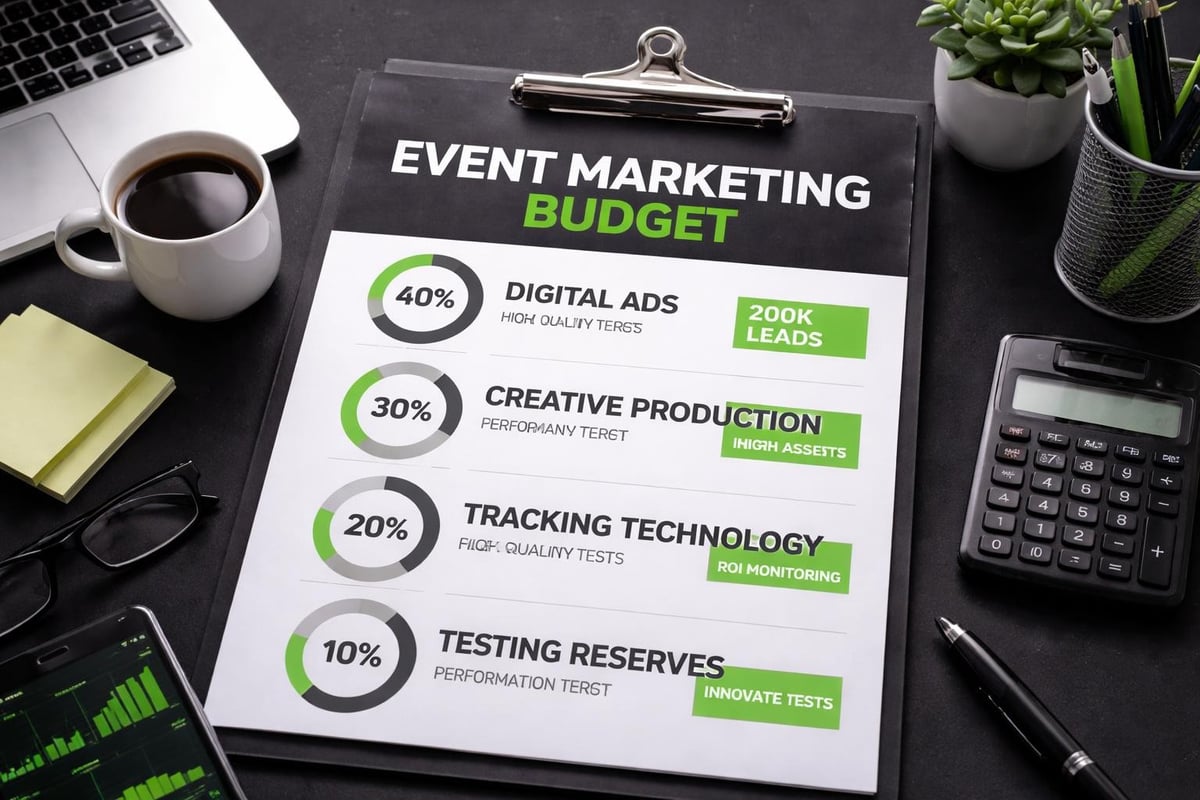
- Testing and optimization reserves
- Contingency funds for unexpected opportunities
Setting clear objectives drives smarter spending decisions. Managing advertising budgets effectively requires linking every dollar to measurable outcomes like ticket sales, registration completions, or brand awareness metrics.
Strategic Allocation Across Channels
Channel selection dramatically impacts campaign performance. Ad budgets must balance proven platforms with emerging opportunities while matching audience behavior patterns.
Digital channels dominate modern event promotion, but allocation ratios vary by event type. Music festivals see strong returns from Instagram and TikTok, while B2B conferences perform better on LinkedIn and targeted display networks. The event marketing category offers insights into channel-specific strategies.
| Channel Type | Typical Budget % | Best For | Key Metrics |
|---|---|---|---|
| Social Media Ads | 35-45% | Brand awareness, retargeting | CPM, CTR, conversions |
| Search Marketing | 20-30% | High-intent buyers | CPC, conversion rate |
| Display/Programmatic | 15-20% | Broad reach, remarketing | Impressions, viewability |
| Email Marketing | 5-10% | Past attendees, warm leads | Open rate, click-through |
| Influencer/Partnerships | 10-15% | Credibility, niche audiences | Engagement, referral traffic |
The 60-30-10 budgeting rule provides a practical framework: allocate 60% to proven channels delivering consistent results, 30% to emerging opportunities showing promise, and 10% to experimental tactics. This approach balances stability with innovation.
Data-Driven Optimization Techniques
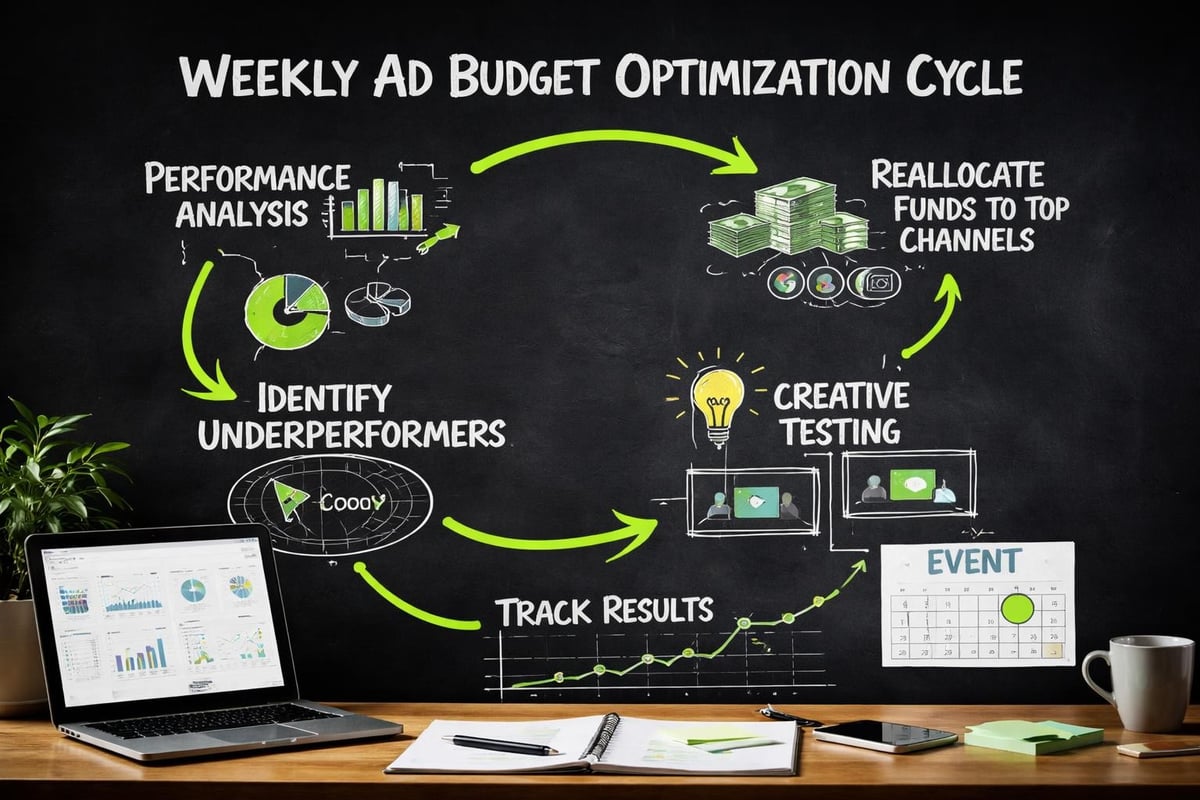
Static ad budgets rarely deliver optimal results. Continuous monitoring and reallocation based on performance data separates successful campaigns from mediocre ones.
Smarter budget allocation strategies leverage AI-driven insights to shift spending toward high-performing segments. Real-time tracking reveals which demographics, creative variants, and dayparts generate the most ticket sales per dollar spent.
Performance-Based Reallocation Process
- Establish baseline metrics during the first two weeks of campaign launch
- Track cost per acquisition across all active channels and ad sets
- Identify top performers exceeding target CPA by 20% or more
- Redirect budget from underperforming channels to winners
- Test new variations with saved budget from eliminated campaigns
- Repeat weekly throughout the entire promotional period
Modern tracking technology enables granular analysis. Attribution modeling shows which touchpoints deserve credit for conversions, preventing premature elimination of valuable awareness channels. Advertising insights help marketers understand the full customer journey from first impression to ticket purchase.
Advanced Budget Management Tactics
Sophisticated marketers employ specialized techniques to extract maximum value from every advertising dollar. These advanced tactics separate average campaigns from exceptional ones.
Dayparting concentrates ad budgets during hours when your target audience shows highest engagement and conversion rates. For evening events, running ads during lunch breaks and evening commutes typically outperforms overnight spending. Google Ads budget management best practices demonstrate how timing optimization reduces wasted spend.
Bidding strategy selection significantly impacts budget efficiency. Manual CPC provides control but requires constant attention, while automated strategies like Target CPA or Maximize Conversions let algorithms optimize based on your goals. Test both approaches with 20% of total budget before committing fully.
Geographic targeting prevents budget waste on unreachable audiences. Events with physical locations should focus spending on markets within reasonable travel distance, adjusting bid modifiers to emphasize nearby population centers.
Budget Pacing Strategies
Early campaign periods require higher investment to build awareness and capture early-bird ticket buyers. A front-loaded approach allocates 40% of total budget to the first third of the promotional period, 35% to the middle phase, and 25% to the final push.
Conversely, urgency-driven campaigns concentrate spending in the final weeks, capitalizing on FOMO and last-minute decision-making. This works particularly well for consumer events and entertainment experiences.
Maximizing ROI Through Testing
Ad budgets should always include dedicated testing allocation. Without experimentation, campaigns stagnate and miss opportunities for improvement.
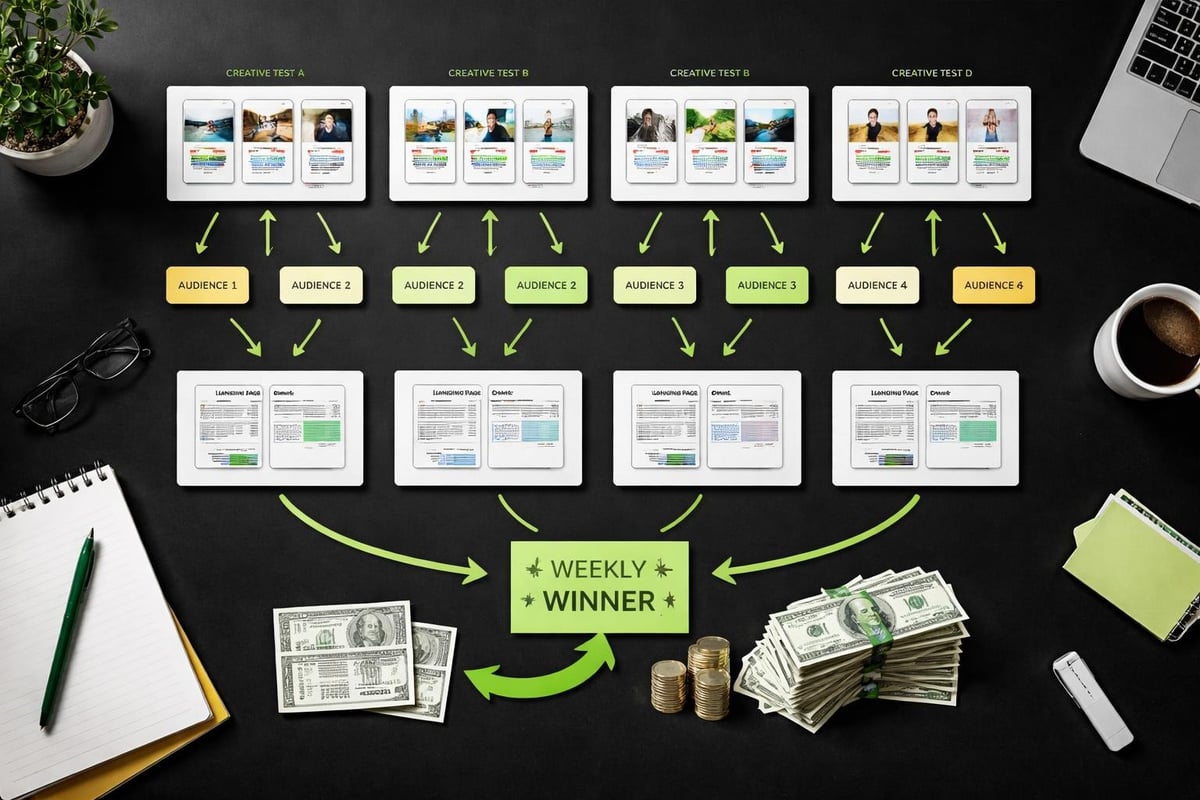
Reserve 10-15% of total spending for structured A/B testing across creative elements, audience segments, and landing page variations. PPC budget allocation guidelines emphasize the importance of statistical significance in test design.
Creative testing reveals which messaging resonates strongest with potential attendees. Test headline variations, image styles, video lengths, and call-to-action phrasing systematically. Winner from each test becomes the new control for subsequent experiments.
Audience expansion testing identifies untapped segments. Create lookalike audiences based on past ticket buyers, test interest-based targeting variations, and explore demographic segments beyond your initial assumptions. Successful event marketing projects often discover high-converting audiences outside their original target profile.
Budget Contingency Planning
Unexpected opportunities and challenges inevitably arise during campaigns. Smart ad budgets include flexibility reserves.
Maintain 15-20% contingency funds for mid-campaign adjustments. Competitor events might suddenly increase market noise, requiring defensive spending. Alternatively, viral social moments could create opportunities to capitalize on trending topics with rapid response creative.
Effective budget management strategies recommend weekly budget reviews rather than set-and-forget approaches. Markets change, algorithms evolve, and audience behavior shifts-your spending strategy must adapt accordingly.
Consider seasonal factors and market conditions when planning initial allocations. Holiday periods often increase advertising costs due to competition from retail brands, while summer months might offer lower CPMs but reduced attention from vacation-minded audiences.
Small Budget Maximization
Limited resources demand creativity and precision. Events with restricted ad budgets can still achieve impressive results through strategic focus and efficient execution.
Maintaining marketing budgets under constraints requires prioritizing high-intent channels over broad awareness plays. Search campaigns targeting event-specific keywords typically deliver better ROI than expensive display campaigns for smaller budgets.
Organic social media, email marketing to existing databases, and strategic partnerships extend limited budgets. Invest advertising dollars primarily in amplifying organic content that already demonstrates engagement and in retargeting warm audiences who've shown interest.
Micro-influencer partnerships often provide better value than celebrity endorsements for modest budgets. Exploring available resources helps identify cost-effective promotional channels specific to your event category and audience demographics.
Mastering ad budgets requires combining strategic planning with continuous optimization and data-driven decision-making. By allocating resources strategically across channels, testing systematically, and remaining flexible throughout campaigns, event marketers maximize ticket sales while controlling costs. Greenslant specializes in helping event organizers optimize their advertising investments through comprehensive channel management, creative production, and advanced tracking that turns budgets into measurable results and sold-out events.