Event partnerships have become essential for creating successful experiences that resonate with audiences and deliver measurable business results. When event organizers collaborate strategically with brands, vendors, and local businesses, they unlock new revenue streams, expand their reach, and enhance the overall attendee experience. These collaborative relationships transform single-organization efforts into powerful networks that amplify marketing messages, share resources, and create value for all parties involved.
Understanding the Strategic Value of Collaboration
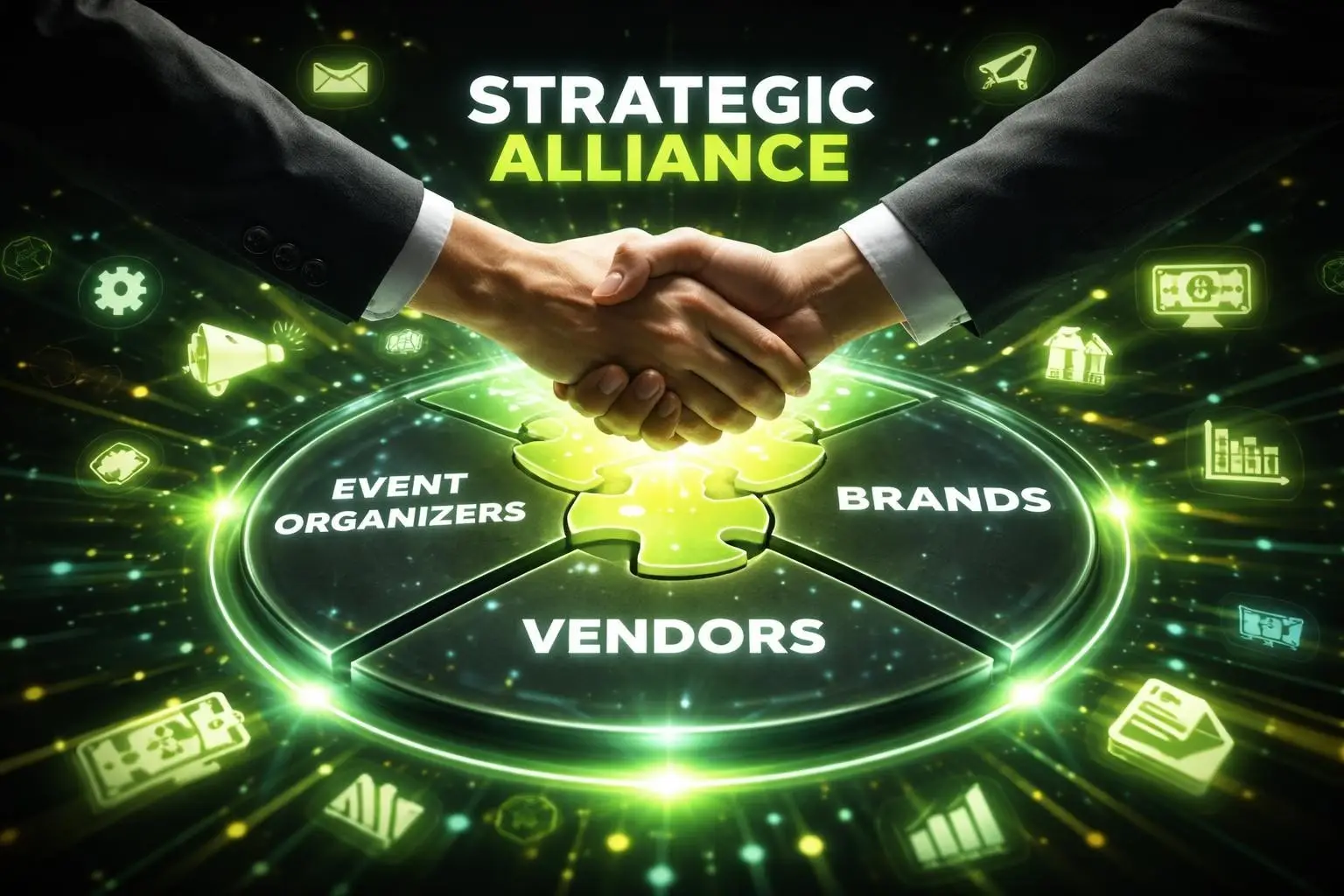
Strategic alliances in the event industry deliver benefits that extend far beyond cost sharing. When you establish strong partnerships with vendors and agencies, you gain access to vetted professionals, strengthen your negotiating position, and reduce the time spent researching suppliers. These relationships create a foundation for consistent quality and reliability across multiple events.
Key benefits include:
- Enhanced credibility through association with established brands
- Access to partner audiences and marketing channels
- Shared financial investment reducing individual risk
- Combined expertise leading to better event execution
- Increased ticket sales through cross-promotion
The right partnerships can transform your event from a standalone occurrence into a community experience. By aligning with organizations that share your values and target audience, you create authentic connections that attendees notice and appreciate.
Types of Partnerships to Consider
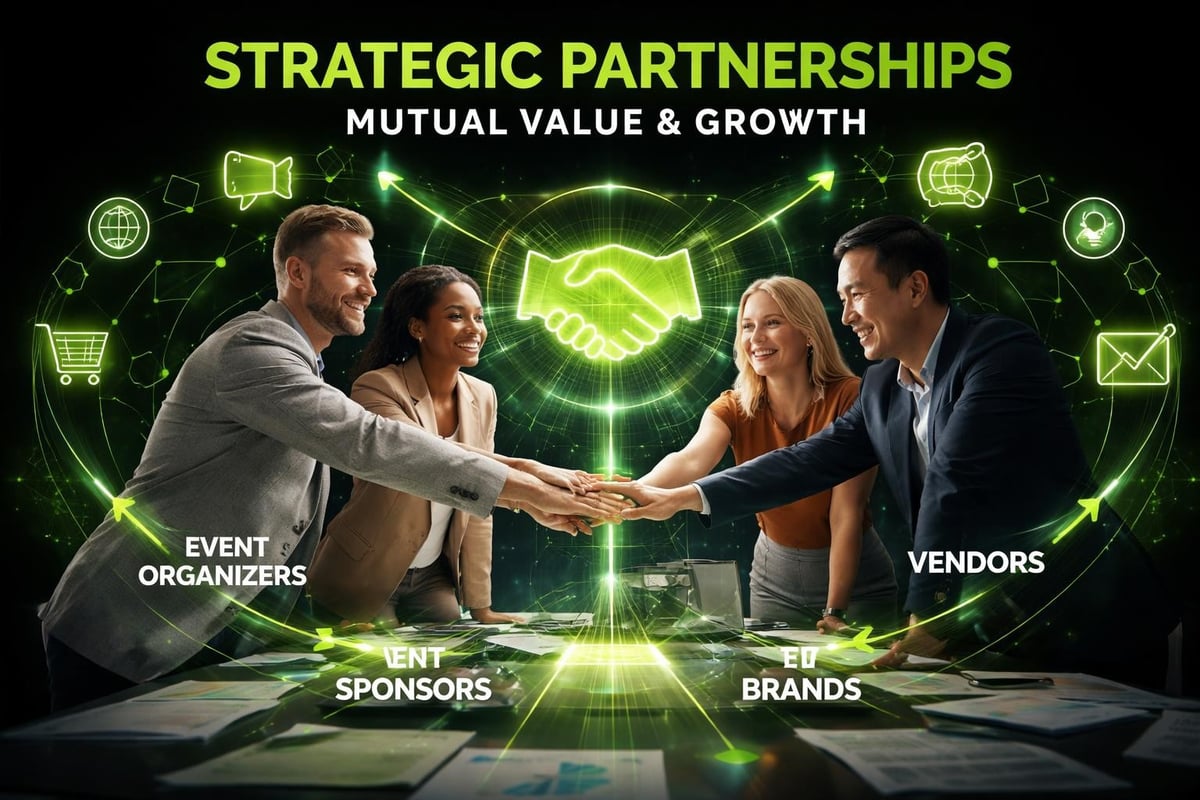
Different partnership structures serve different strategic purposes in event marketing. Understanding these categories helps you identify the right collaborators for your specific goals.
| Partnership Type | Primary Benefit | Best For |
|---|---|---|
| Brand Sponsors | Financial support + promotion | Large-scale events needing funding |
| Vendor Partners | Service delivery + expertise | Events requiring specialized skills |
| Media Partners | Audience reach + credibility | Events seeking wider awareness |
| Community Partners | Local engagement + attendance | Regional events building loyalty |
Brand partnerships offer particularly strong opportunities for events seeking to expand their marketing capabilities. When you partner with complementary brands, you tap into their customer base while offering them access to your engaged audience. This mutual benefit creates sustainable relationships that can extend across multiple event cycles.
Building Venue and Local Partnerships
Venues represent a critical partnership category that many event planners overlook. Unique venues can grow bookings through local partnerships by collaborating with nearby businesses, restaurants, and attractions. As an event marketer, leveraging these existing relationships can enhance your attendee experience while reducing logistical burdens.
Local business partnerships provide authentic connections to your event location. Restaurants, hotels, transportation services, and entertainment venues can become valuable allies who promote your event to their customers while providing discounted services to your attendees.
Establishing Effective Partnership Frameworks
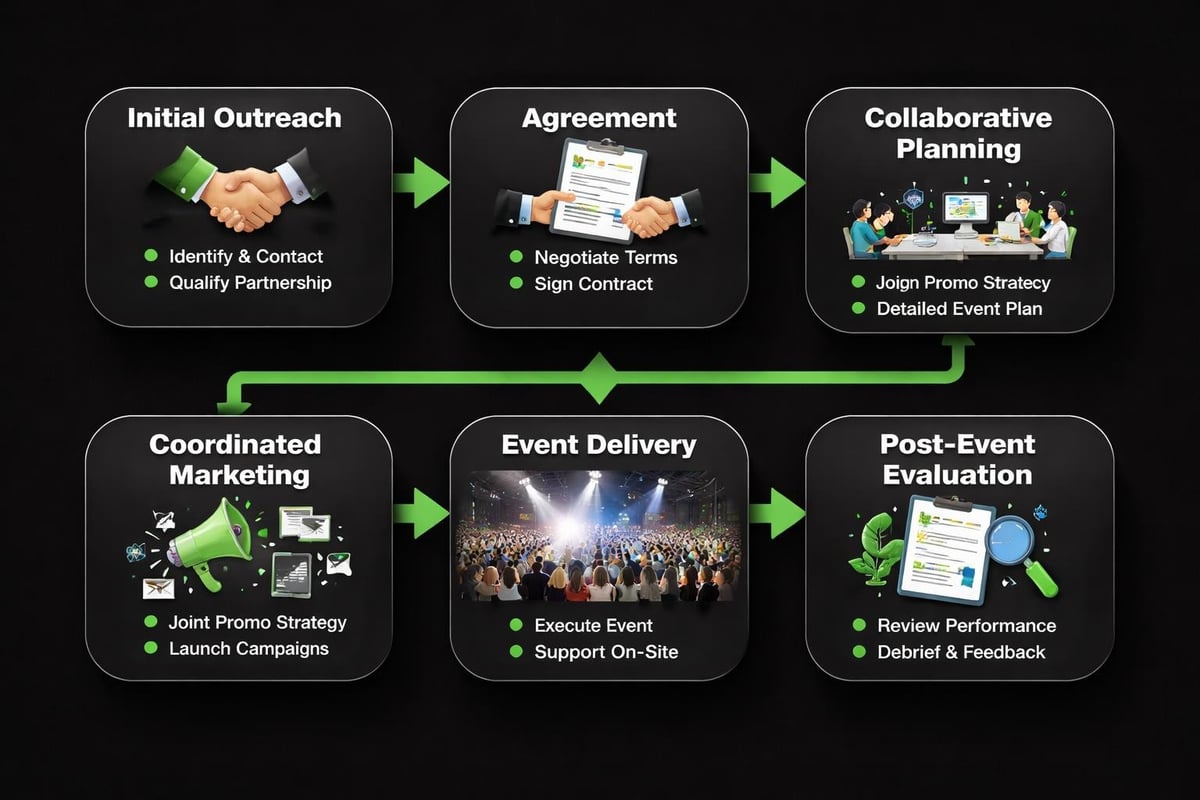
Successful event partnerships require clear structures and expectations from the beginning. Understanding what makes exceptional partnerships work involves defining roles, responsibilities, and success metrics before any contracts are signed.
Essential framework elements:
- Clear role definition – Document who handles what
- Transparent communication channels – Establish regular check-ins
- Shared goals and KPIs – Align on what success looks like
- Budget allocation – Define financial contributions and controls
- Timeline coordination – Sync promotional activities
Managing vendor relationships effectively requires organization and consistent communication. Create detailed timelines, maintain centralized documentation, and schedule regular updates to keep all partners aligned throughout the planning process.
Maximizing Partnership Value Through Marketing
The marketing potential of event partnerships extends well beyond logo placement and social media mentions. Strategic partners can amplify your message through their owned channels, creating multiplicative effects that significantly expand your target audience reach.
Coordinate content calendars with your partners to ensure consistent messaging across all channels. When partners promote your event through email, social media, and their websites simultaneously, you create momentum that individual efforts cannot achieve. This synchronized approach drives ticket sales and builds anticipation more effectively than isolated campaigns.
Leveraging Digital Marketing Partnerships
Digital marketing partnerships offer sophisticated opportunities for audience expansion and conversion optimization. By integrating tracking systems across partner channels, you can measure which collaborations drive the highest ROI and adjust your strategy accordingly.
Advanced tracking becomes particularly valuable when multiple partners promote your event simultaneously. Attribution modeling helps you understand which partnerships generate qualified leads versus simple awareness, enabling smarter budget allocation for future events.
Nurturing Long-Term Partnership Success
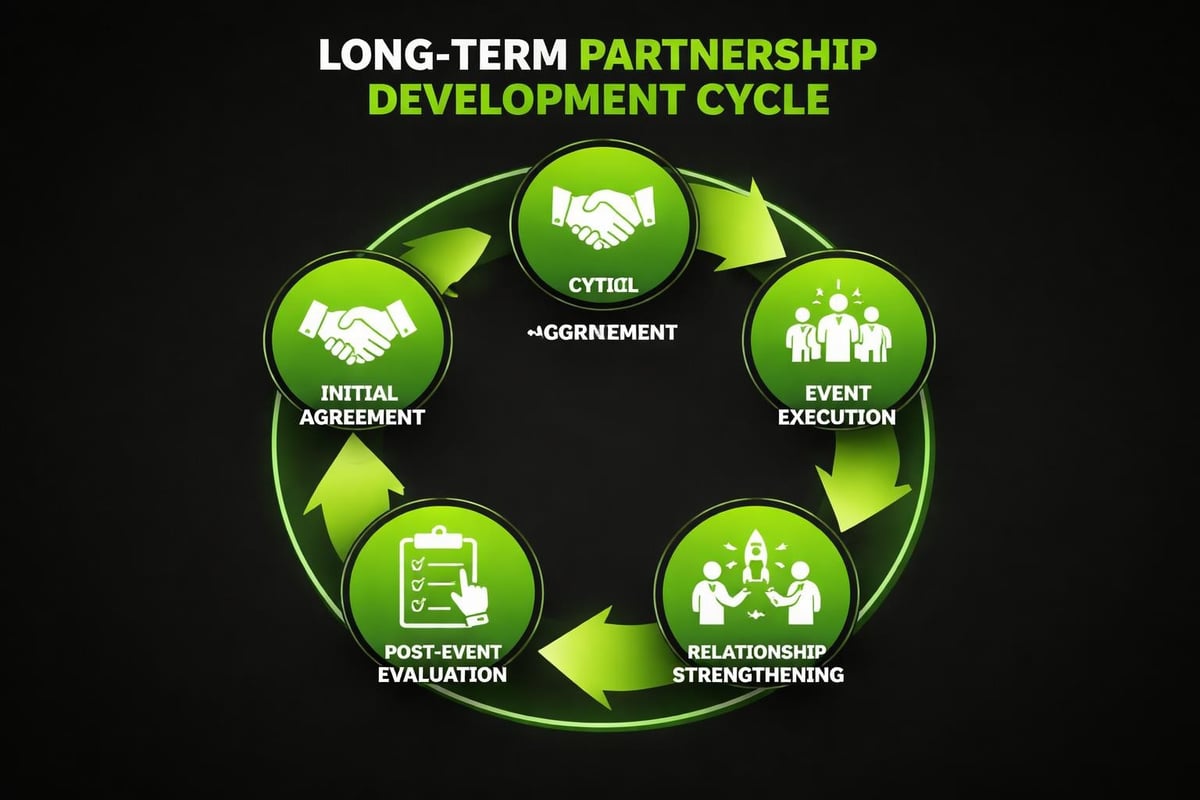
One-time collaborations rarely deliver maximum value. The most successful event partnerships evolve into long-term relationships that improve with each iteration. Building lasting partnerships requires ongoing effort, transparency, and mutual benefit demonstration.
After each event, conduct thorough partnership evaluations with all collaborators. Share performance data, discuss what worked well, and identify improvement opportunities. This post-event analysis strengthens relationships and provides valuable insights for future collaboration.
| Success Factor | Implementation Strategy | Measurement Method |
|---|---|---|
| Communication | Weekly update calls | Partner satisfaction surveys |
| Value Delivery | Clear ROI reporting | Conversion tracking data |
| Flexibility | Adaptive agreements | Milestone reviews |
| Innovation | Quarterly brainstorming | New initiative adoption |
Creating value for your partners should remain a constant priority. When partners see tangible results from their collaboration-whether through increased ad expenditure efficiency, expanded audience reach, or enhanced brand perception-they become advocates for continued partnership.
Scaling Partnerships for Growth
As your events grow, your partnership strategy should scale proportionally. Working with experienced agencies and planners can help you identify high-value partnership opportunities and manage increasingly complex collaboration networks.
Consider creating tiered partnership programs that offer different benefits based on investment levels. This structure allows smaller partners to participate while reserving premium benefits for major collaborators. Tiered programs also provide natural upgrade paths as relationships mature and partners see positive results.
Partnership tier structure:
- Premier partners: Exclusive category rights, prime branding, co-marketing campaigns
- Featured partners: Prominent logo placement, speaking opportunities, booth space
- Supporting partners: Logo inclusion, social media mentions, ticket allocations
- Community partners: Cross-promotion, resource sharing, networking access
Monitor partnership performance metrics consistently to identify which relationships drive the most value. Track ticket sales attributed to partner promotions, audience engagement from partner channels, and overall ROI from each collaboration.
Strategic event partnerships create powerful opportunities for growth, audience expansion, and enhanced experiences that neither organization could achieve independently. By establishing clear frameworks, maintaining transparent communication, and consistently delivering mutual value, you build collaborative relationships that strengthen with each event cycle. When you're ready to amplify your event marketing through comprehensive solutions that boost ticket sales and brand awareness, Greenslant provides the advertising channels, creative production, and advanced tracking needed to maximize partnership impact and drive measurable results.